The most useful thing a client can tell you is not what they said after the event. It is whether they called again.
CAI Capital Partners, a Vancouver investment firm, booked me twice in 2025. Once in July, for a summer party. Once in November, for a company dinner at a restaurant. Two very different rooms, four months apart.
I want to write about both, because the second booking is the part that actually says something, and because the two events together are a good illustration of how differently the same service behaves depending on the room you put it in.
July: the hardest kind of corporate event to get right
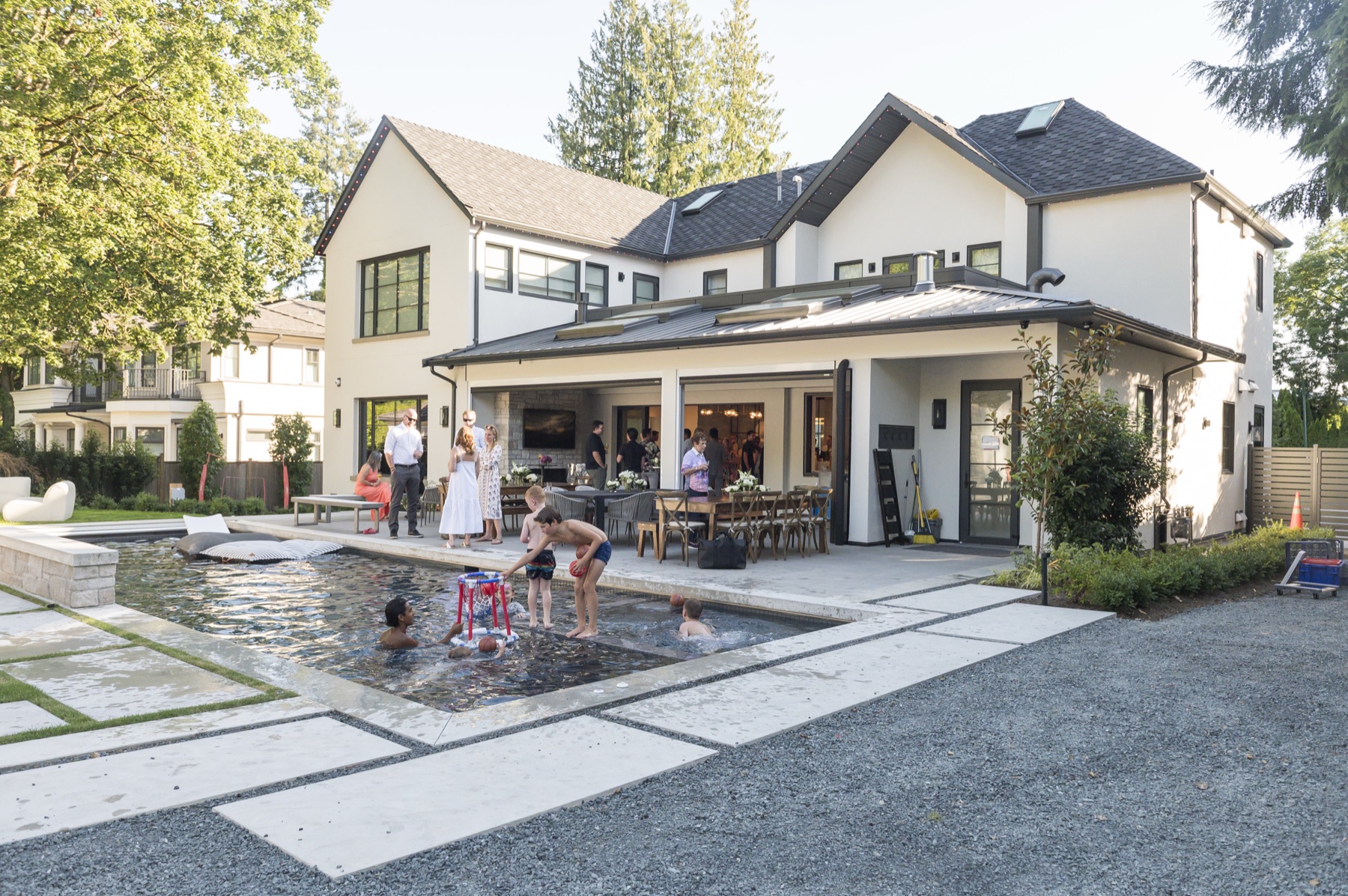
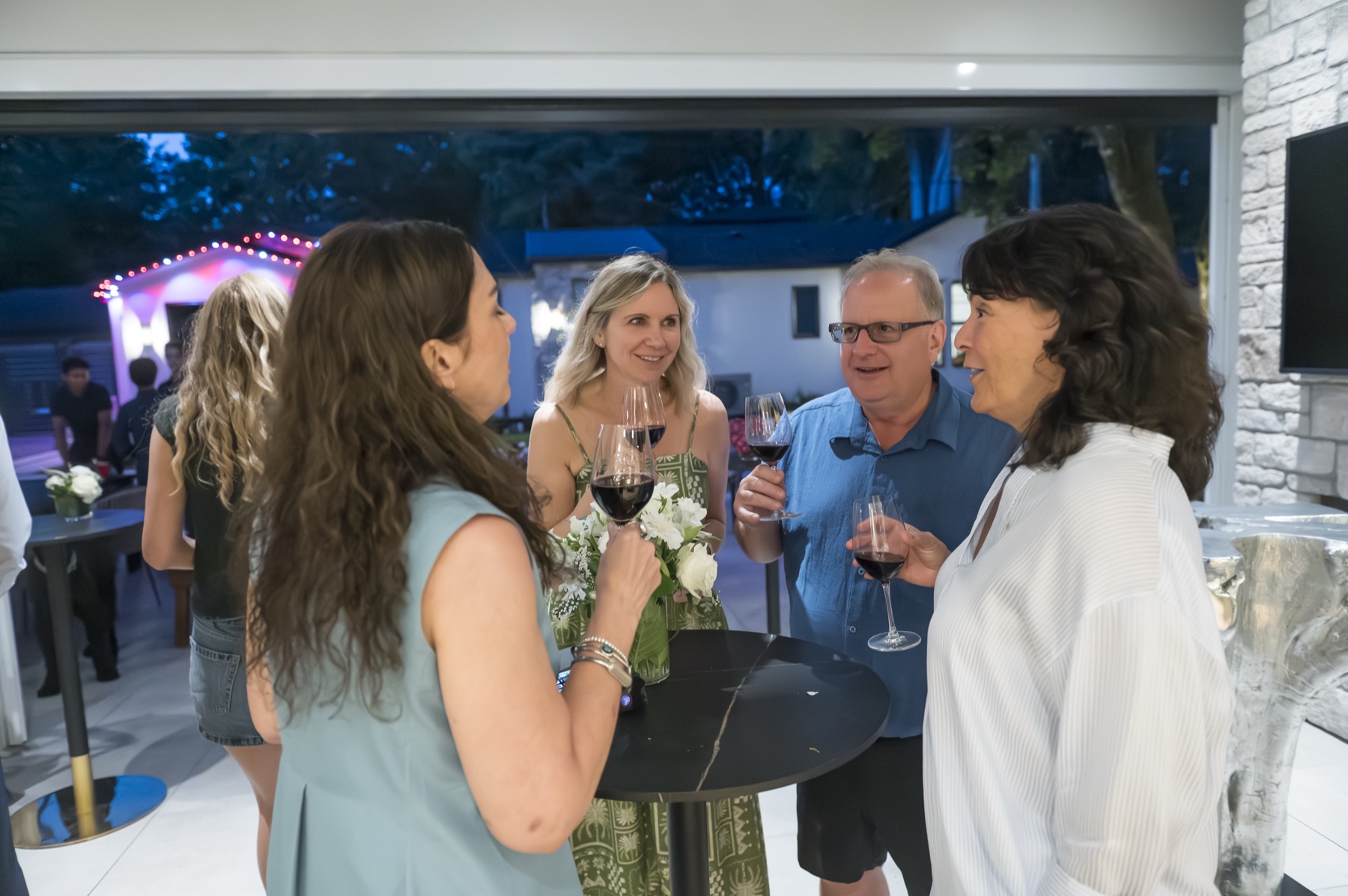
The summer event was thirty people at a private residence in Vancouver. Colleagues, but with spouses and children along, from 5:30 in the evening.
That mix is genuinely difficult, and I would say harder than a ballroom of two hundred.
A corporate dinner has a shape. Arrival, seating, speeches, dessert, done. A summer party at somebody's home has no shape at all. There is no agenda to carry the night. People arrive across an hour. Some know each other well and some have never met. There are kids in the pool and grandparents on the patio and a CFO trying to relax while also being at a work thing.
The failure mode is predictable: it splits. Partners talk to partners, colleagues talk to colleagues, kids do their own thing, and by eight o'clock you have three separate parties happening in one garden.
What close-up magic does that a shape-less party needs
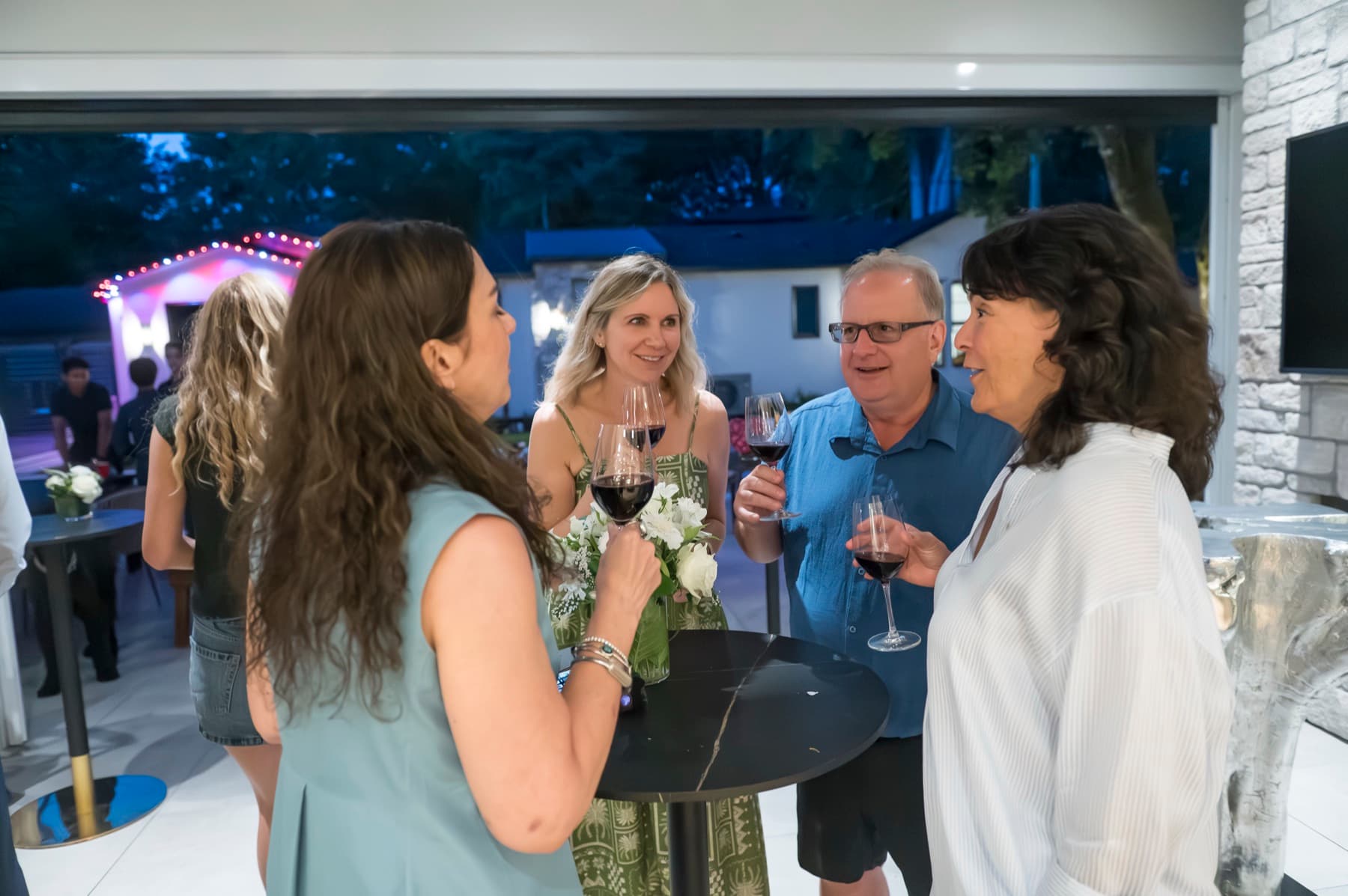
I worked two hours of close-up mingling across the evening. No stage, no announcement, no moment where anyone had to stop and pay attention on cue.
That last part is the whole reason this format suits a garden party. You cannot run a stage show at somebody's home in July. There is nowhere to put an audience, the light is wrong, and asking forty people to sit down outdoors is a fight you will lose.
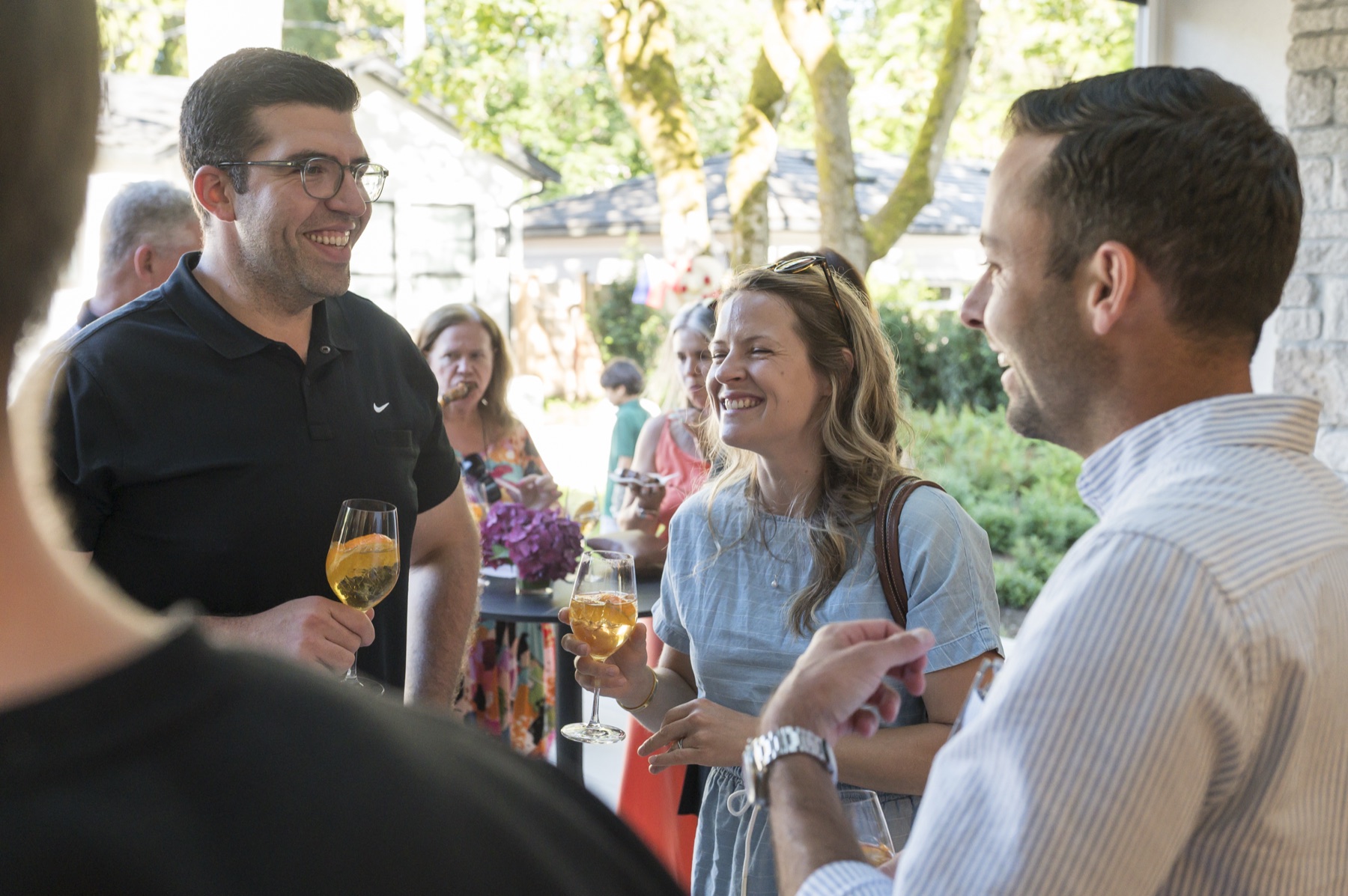
Close-up does not need any of that. I go to where people already are. Two people become five. The group that forms includes whoever happens to be standing nearby, which at a party like this means a partner who knew nobody thirty seconds ago is now in a circle with two colleagues and both of them are laughing at the same thing.
That is the actual job. Not the trick. The circle.
November: the same client, a different room
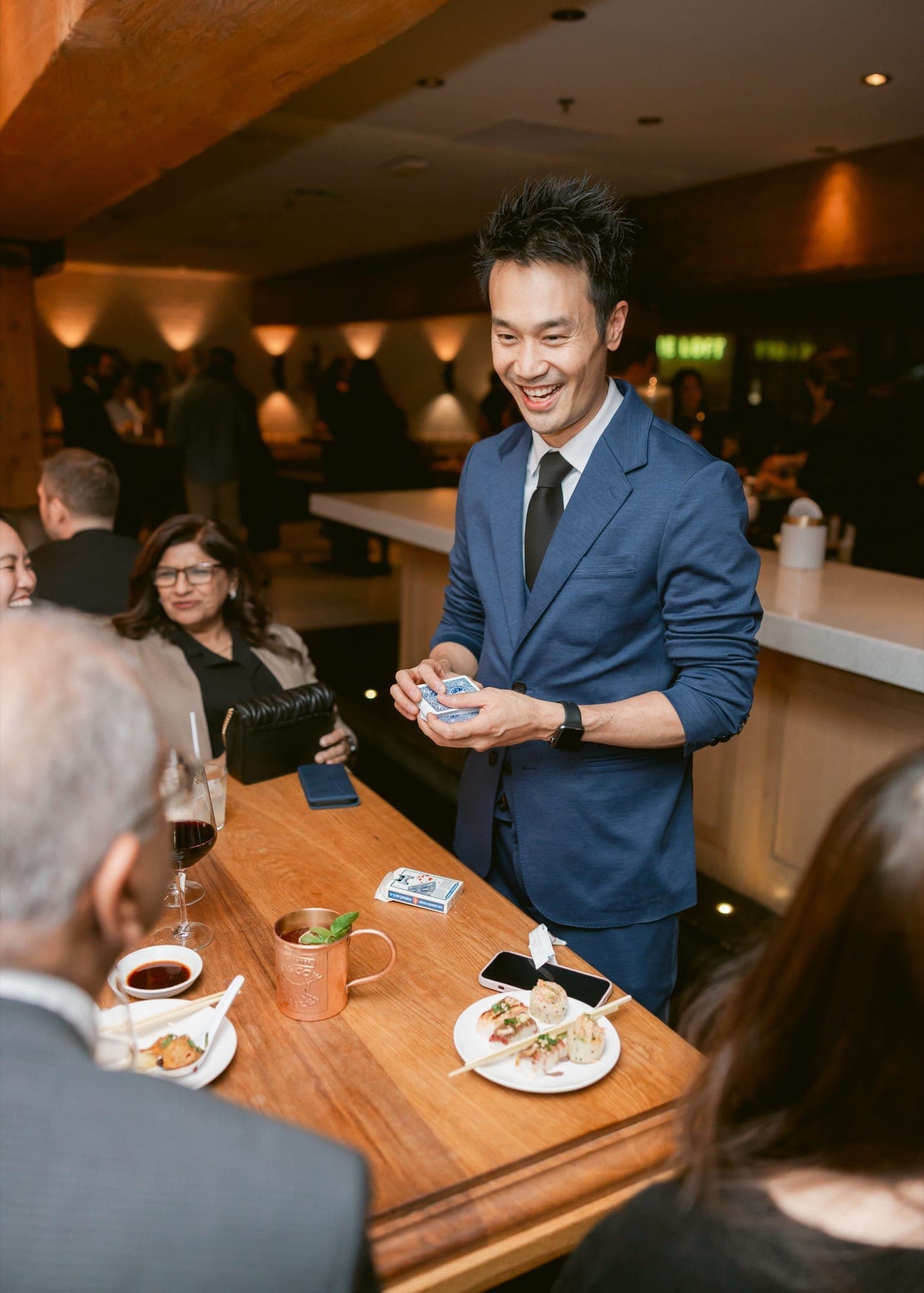
Four months later, CAI booked again. Fifty people this time, at La Terrazza on Cambie Street, 5:30 to 9:00 on 4 November. They confirmed and paid in September, seven weeks out, which is its own small signal — a repeat client does not haggle over the deposit.
That is a completely different problem. A restaurant is contained, indoors, louder, and the guest list is colleagues rather than families. But the underlying need had not changed: a room of people who work together, in a social setting, with a stretch of unstructured time at the front of the evening that either builds momentum or kills it.
Same service, different room, and the format bent to fit without anything being redesigned.
Why a rebooking is worth more than a review
I collect reviews and I am grateful for every one. But a review is written in the warm glow twenty minutes after the show, and everyone is generous then.
A rebooking is written four months later, out of a budget, by someone who has to justify the line item again. It is the only feedback that costs the client something. When a firm comes back inside the same year and brings a bigger group the second time, that tells you the first event did what it was supposed to do, and that whoever signed off on it did not regret it in the cold light of a Q4 budget review.
If you are choosing entertainment for a corporate event, that is the question I would ask any performer you are considering: not who has booked you, but who has booked you twice.
Frequently asked questions
What kind of entertainment works for a corporate party with families?
Close-up magic handles a mixed-age crowd better than almost anything else, because it works in small groups rather than from a stage. Nobody has to be seated, nothing needs to be scheduled, and it holds an adult and a nine-year-old standing in the same circle. A stage show at a garden party fights the setting; close-up works with it.
How long should a magician work a summer party of thirty?
Around two hours. That is enough to reach every group at least twice across an evening where people arrive over a long window. For a shorter, contained event with everybody present at the start, ninety minutes is usually sufficient.
Does close-up magic work outdoors?
Yes, and it is one of the few entertainment options that genuinely does. There is no sound system to fight the open air, no lighting rig, and no stage sightlines to solve. The main practical consideration is wind and surfaces, which is a working detail rather than a problem.
Do corporate clients usually rebook?
The good sign is not whether they say they will, it is whether they do. Repeat bookings across a year, from the same firm for different event formats, are the clearest evidence that entertainment earned its place in the budget rather than just filling a gap in the agenda.
Photography for the July event by J Chan Photography.