I am a magician, so you should read this knowing I have a horse in the race. I am going to try to be genuinely useful anyway, because the way most companies choose between these three is not by comparing them properly. It is by picking whichever one they had last year.
All three work. They just do completely different jobs, and picking well means knowing which problem you actually have.
What each one is actually for
A DJ manages energy over time. That is the real job — not playing songs, but reading a room across four hours and controlling its temperature. A good DJ is genuinely skilled at this and it is why a bad one is so noticeable. What a DJ needs to succeed is a dance floor and a crowd willing to use it.
A photo booth manufactures a keepsake. It gives guests a reason to group up, a prop to be silly with, and something to take home. It also runs itself, which is a real operational advantage. What it needs to succeed is guests who will walk over to it.
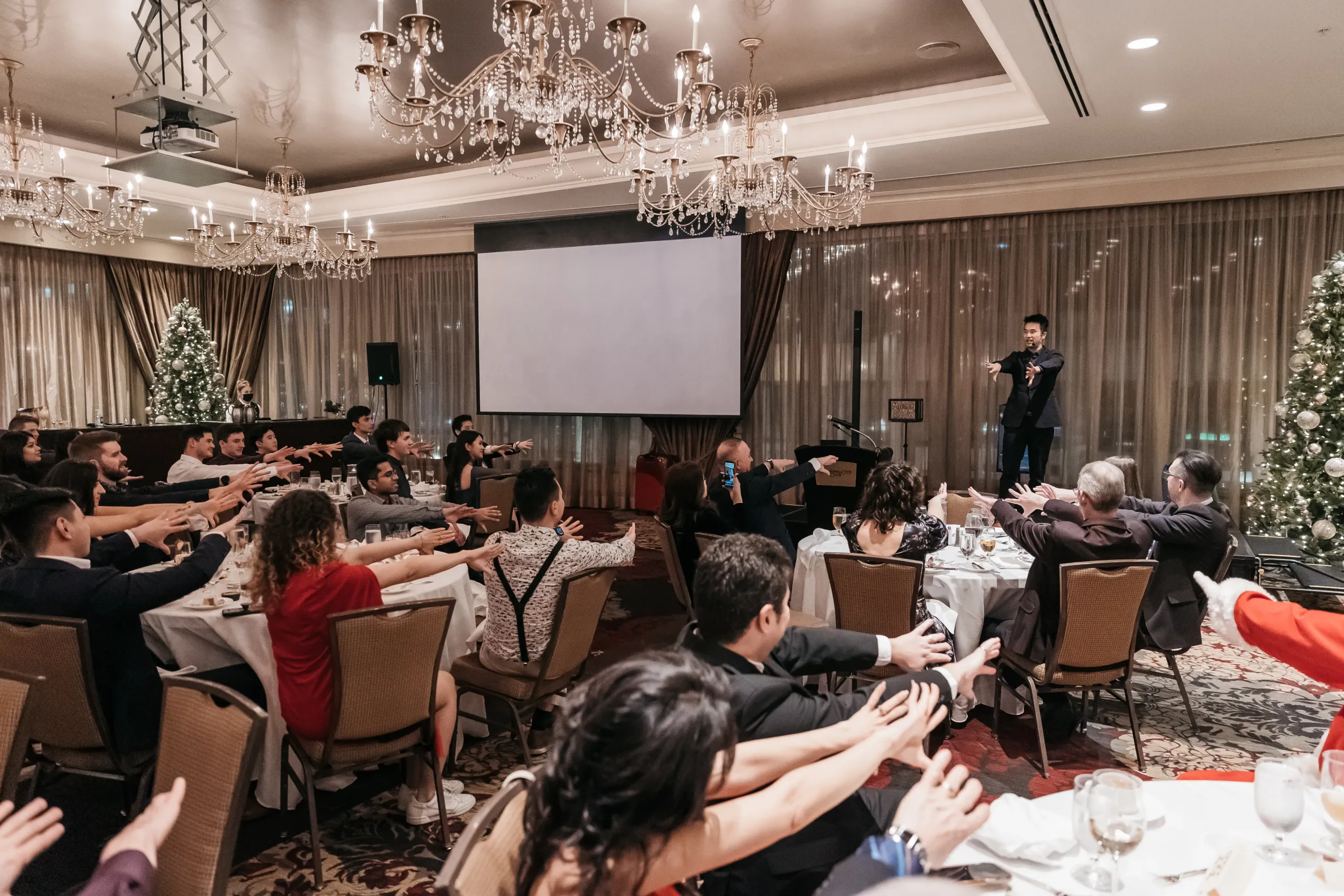
A magician creates moments between people. The magic is the mechanism, not the product. What actually happens is that a group forms around something impossible, and strangers react together. What it needs to succeed is people standing in a room, which you already have.
The Monday test
Here is the test I would apply, and it is the only one that has ever seemed honest to me.
On Monday morning, what do people say to the colleague who did not come?
- DJ: "The music was really good." Or, more often, nothing at all — because a DJ working well is invisible, which is a compliment and also the problem.
- Photo booth: they show them a photo. Something concrete, which is genuinely valuable.
- Magician: they try to describe what happened, get halfway through, and say "you had to be there." Then they go and find someone else who was there.
That third reaction is the one worth paying for, and it is worth being clear about why: it is the only one that makes people talk to each other rather than about the event.
Pick by the problem you have
Forget the categories. Name your actual problem.
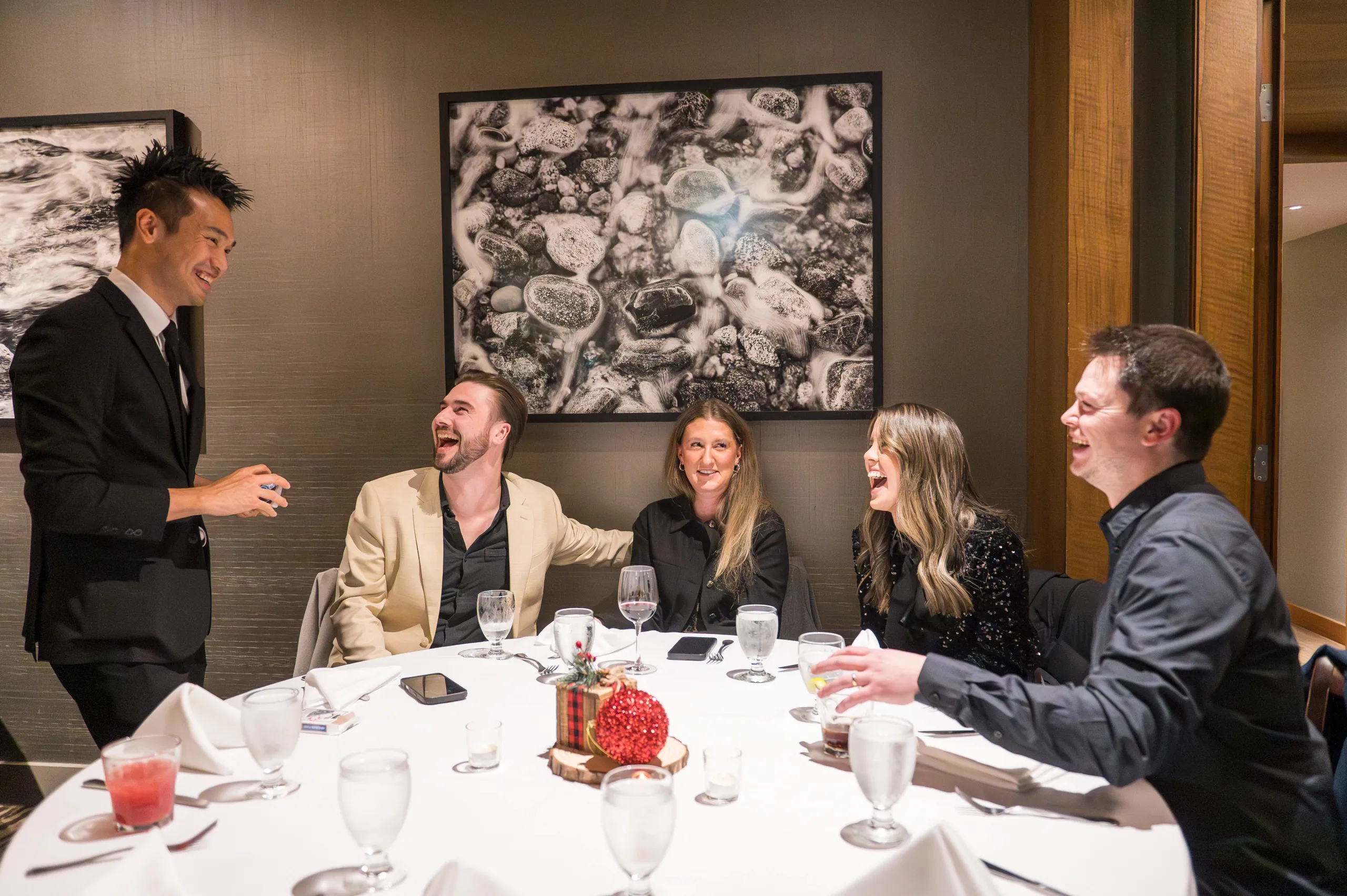
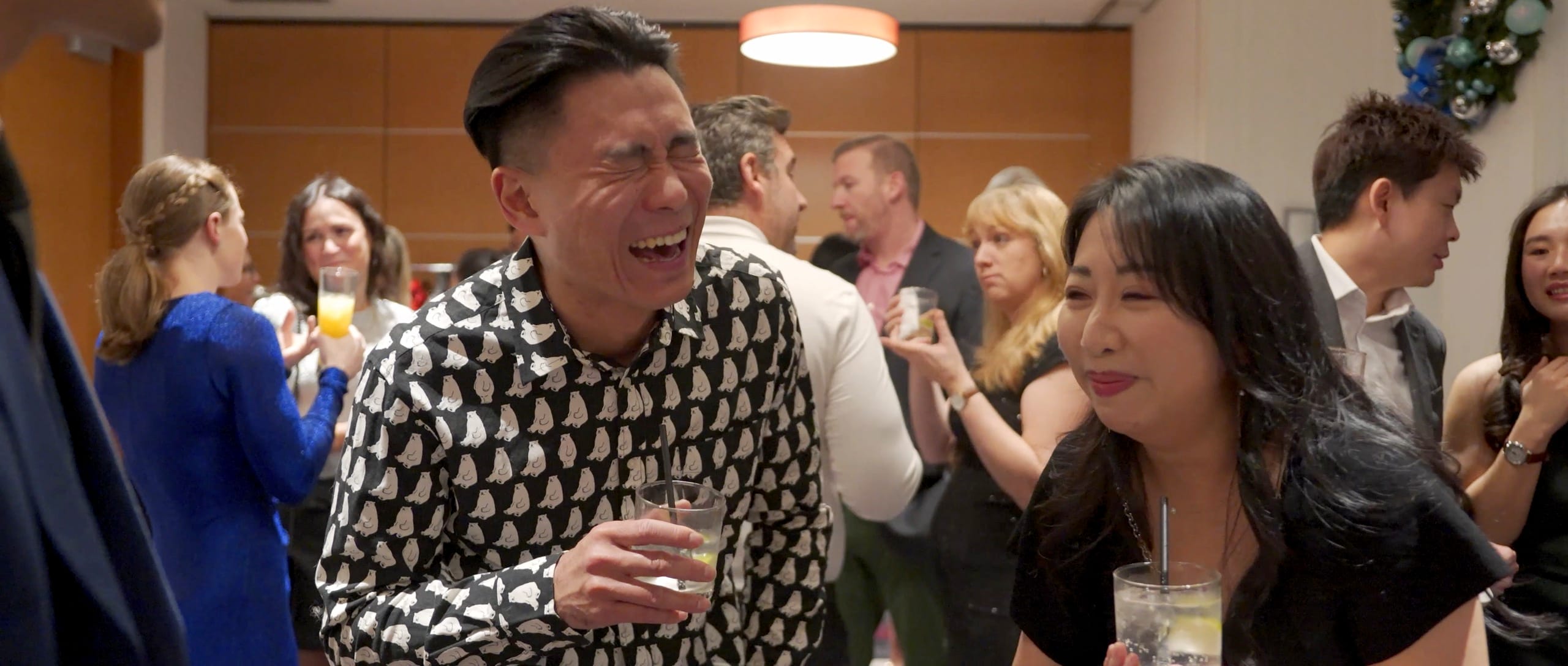
"Our cocktail hour is dead." — Magician. This is the single clearest case. A cocktail hour is people standing with a drink next to colleagues they half know, and no reason to move. A DJ cannot fix it, because nobody dances at 5:30. A photo booth partly fixes it, if people walk over. Close-up magic fixes it directly, because the entertainment goes to where people are standing and forms groups on the spot.
"Nobody dances." — DJ, and possibly a better one than you had. That is squarely their job. A magician will not get your room dancing.
"We want something for social media." — Photo booth. Nothing else produces shareable assets on the night with no effort from you.
"Half the room doesn't know the other half." — Magician. Mergers, multi-office teams, client-and-staff mixers, anything where two groups need to become one. The whole mechanic of close-up is forming groups out of whoever is standing nearby.
"Last year was fine but forgettable." — Magician, honestly. "Fine but forgettable" usually means the room was serviced but never surprised.
"There's a long dead stretch in the schedule." — Magician, or an MC, or both. Photo booths and DJs do not fill a gap in a programme; they occupy space at the edges of one.
The comparison nobody makes: what happens if it goes wrong
This is worth more attention than it gets.
If the DJ is bad, your dance floor is empty and everyone notices at once. It is the most visible failure of the three.
If the photo booth is bad — wrong location, queue too long, no attendant — it just goes unused. Low ceiling, low floor. It is the safest of the three and also the least likely to be the thing people remember.
If the magician is bad, it is worse than a bad DJ, because it is personal. Someone got embarrassed in front of their boss, or the material was not right for the room, or the performer could not read that the CFO did not want to be picked. That is the risk you are managing when you book this category, and it is why the questions you ask matter more here than anywhere else.
Do you have to choose?
Usually not, and the best corporate evenings I work do not.
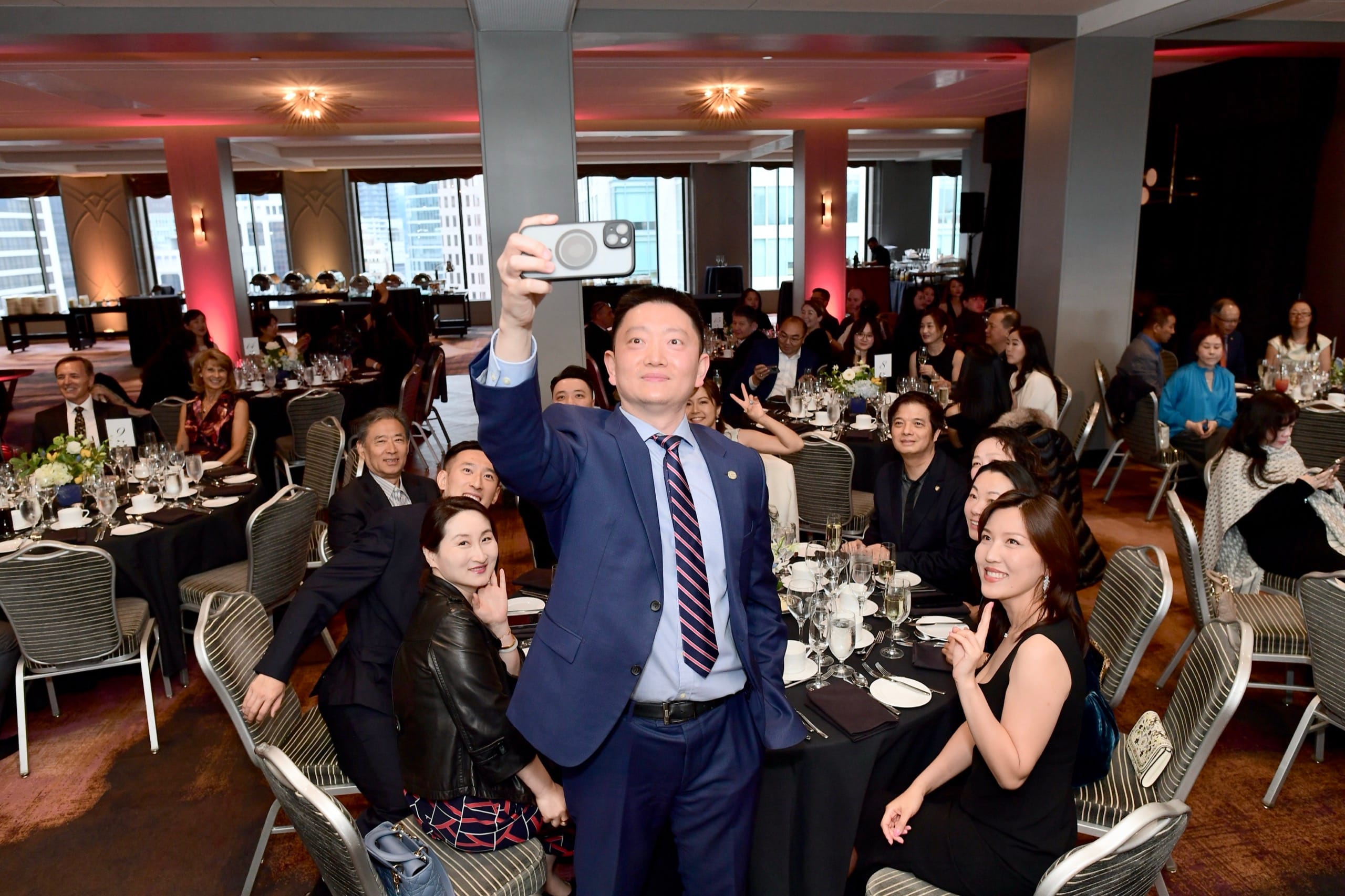
The formats sit at different points in a night. Close-up magic through cocktail hour and early dinner, when the room is cold and standing. A show or an awards programme in the middle. A DJ at the end, once people are warm enough to dance. A photo booth running quietly at the edge the whole time.
If your budget only stretches to one, pick by which stretch of your evening is weakest. Most companies over-invest in the last hour, which largely takes care of itself once people are warm, and under-invest in the first, which is where the night is actually won or lost.
Frequently asked questions
Should we hire a magician or a DJ for our company party?
They solve different problems. A DJ manages energy over a long evening and gets people dancing; a magician warms a cold room and gets strangers talking. If your dance floor was empty last year, that is a DJ problem. If the first hour was flat and nobody mixed, that is a magician problem.
Is a photo booth better value than a magician?
For shareable content, yes — nothing else produces photos your team takes home. For getting a room to connect, no, because a photo booth waits for guests to come to it and a roaming magician does not. Many events sensibly do both.
What entertainment fixes a boring cocktail hour?
Close-up magic, more reliably than anything else, because it comes to guests where they are standing and forms groups without anyone having to walk anywhere. Music and photo booths both need the room to move toward them first.
How much of the entertainment budget should go to the first hour?
More than most companies allocate. The reception is when your guests are coldest and least connected. If the first hour works, the rest of the evening is far easier; if it does not, you spend the night trying to recover.