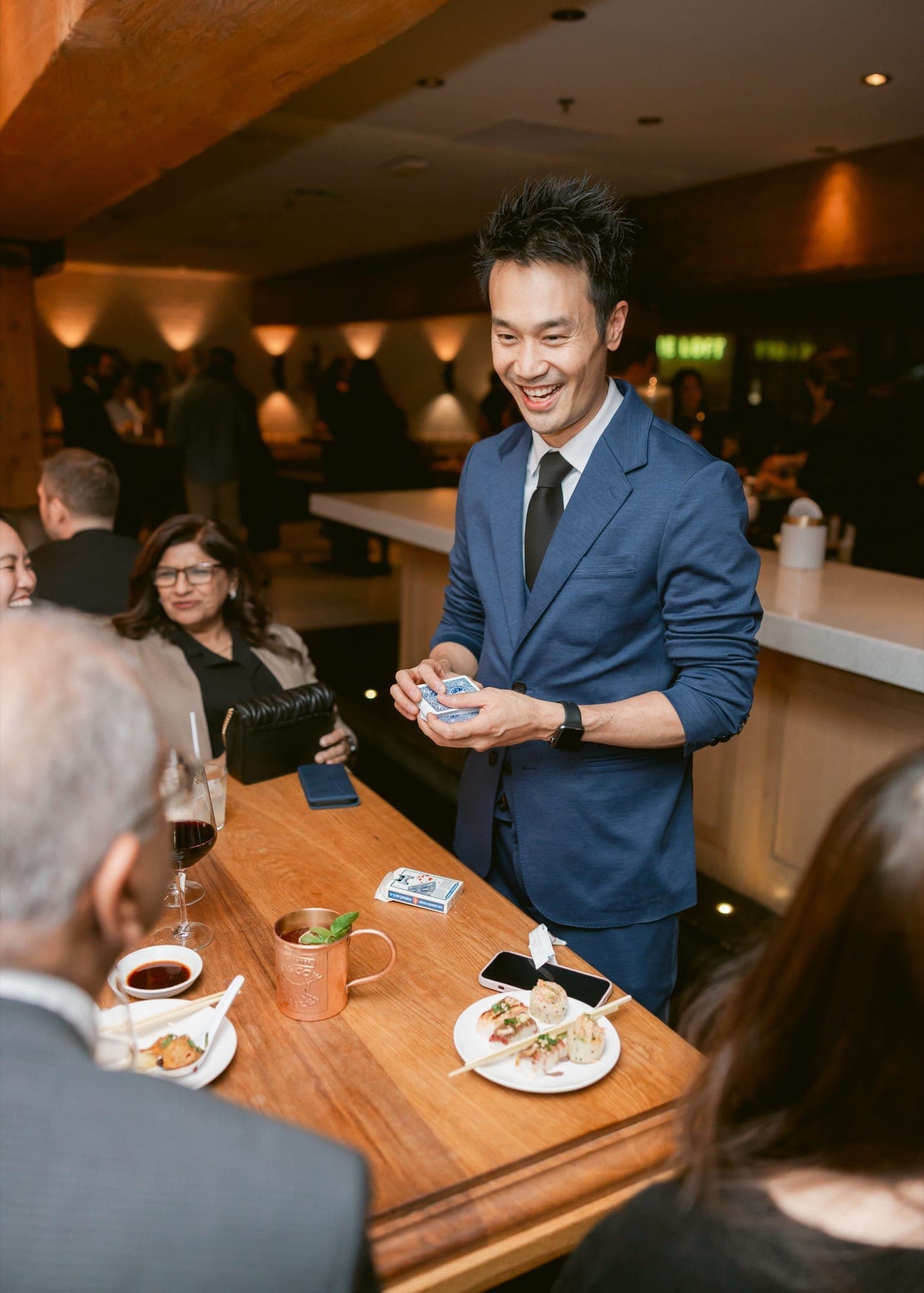
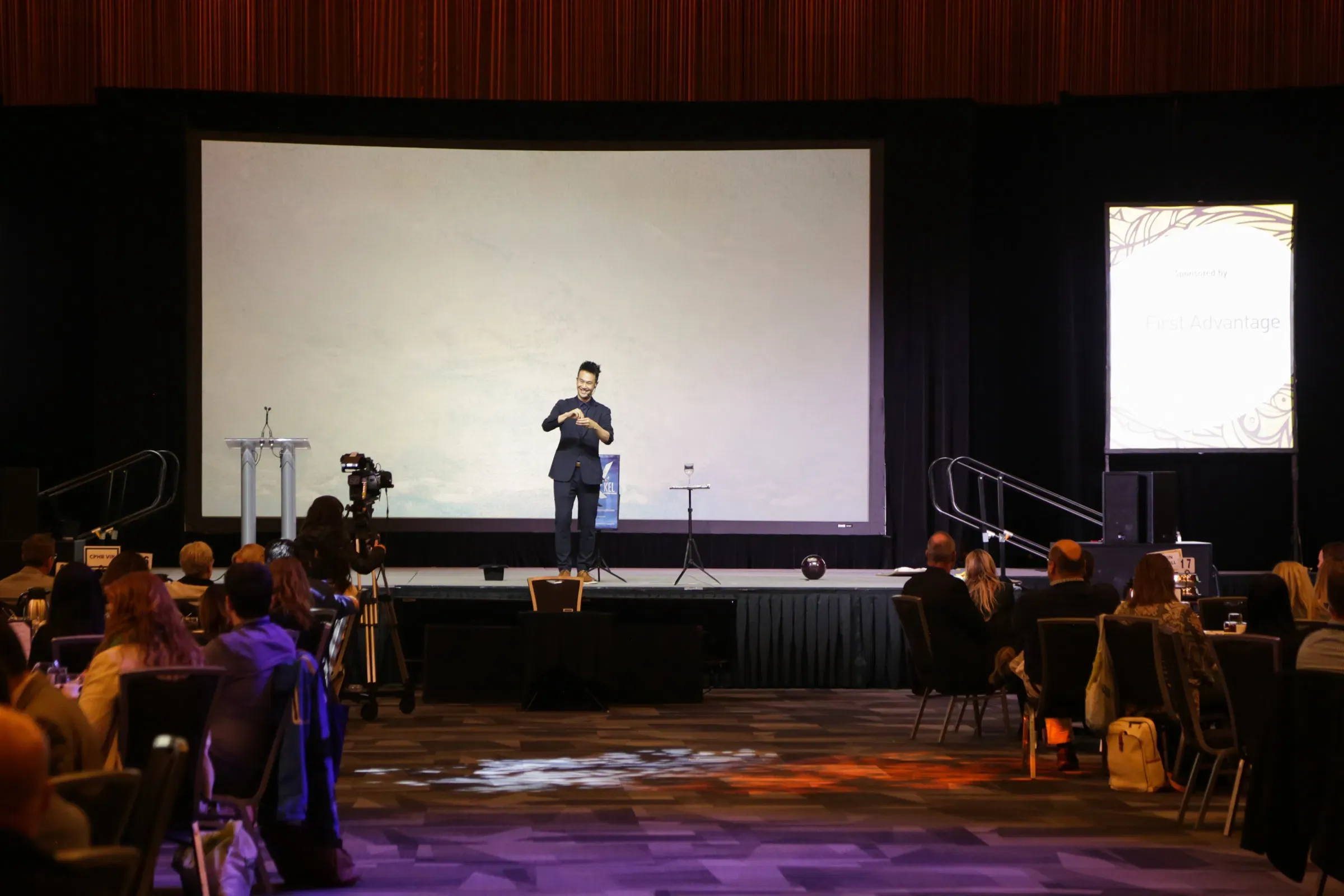
Most of the corporate work I do is an evening. Dinner, drinks, a programme, people who came to enjoy themselves.
A conference is a different animal, and I think it is the format planners most often get wrong when they book entertainment.
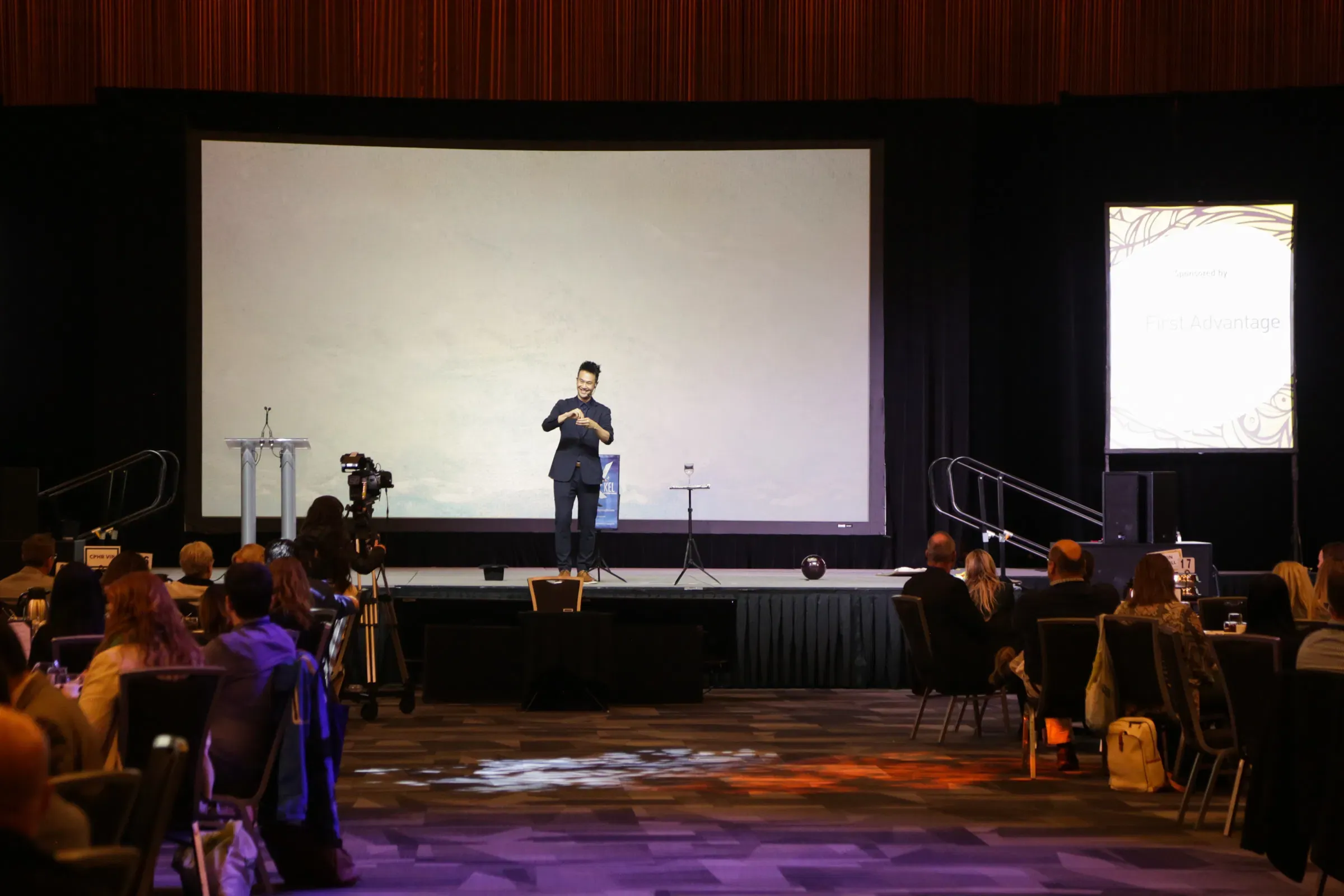
I performed at the CPHR conference in Vancouver in 2022, on the main stage in front of several hundred delegates, and worked the trade show floor during the breaks. Two completely different jobs on the same day, for the same audience.
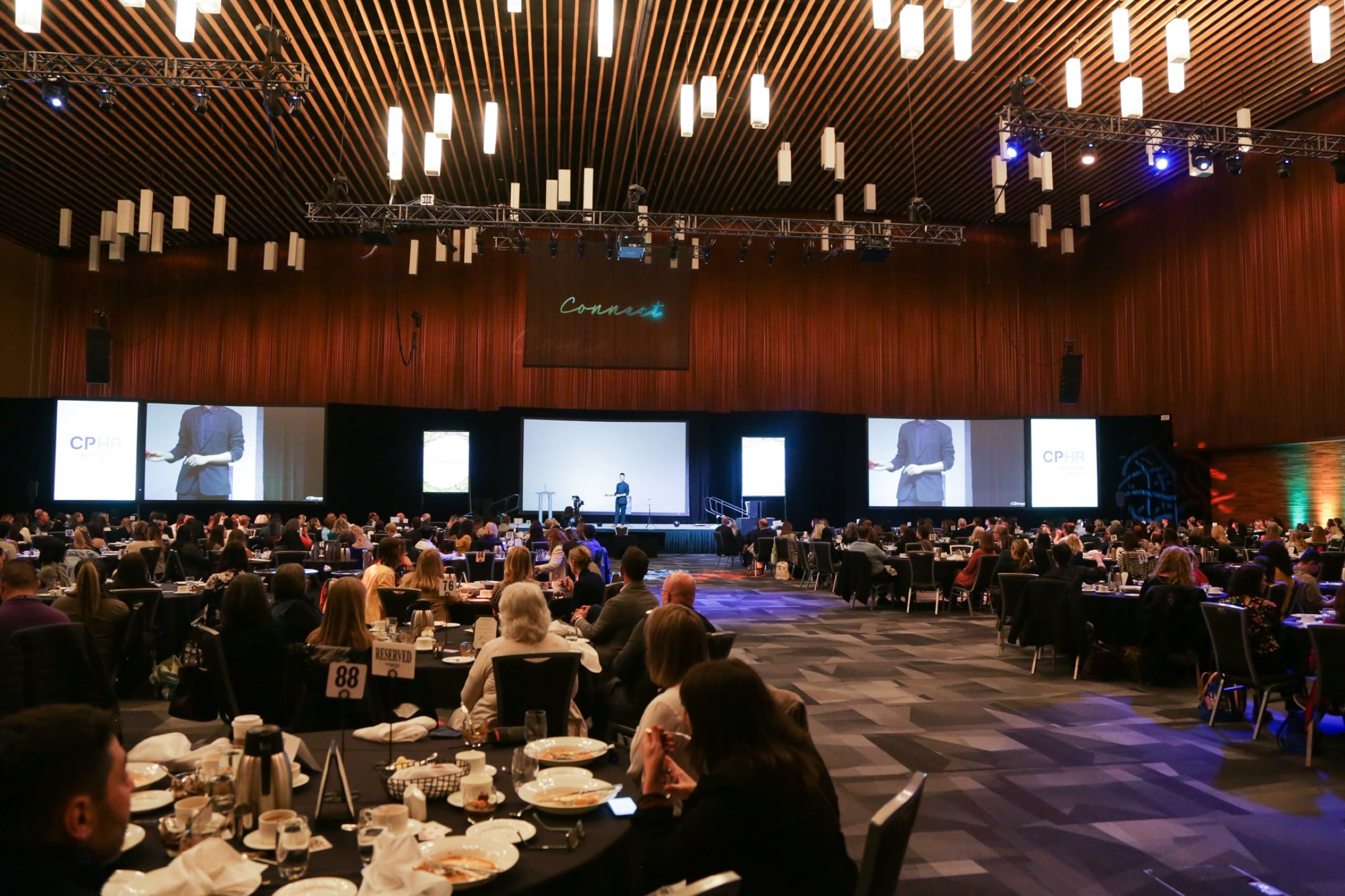
The conference audience problem
Here is what makes a conference crowd genuinely difficult, and it has nothing to do with size.
They are tired. By the time you get a mid-afternoon or post-lunch slot, your audience has absorbed four hours of content. They have taken notes, sat in the same chair, and processed a lot of information. Their attention is not hostile, it is depleted.
They are also professionally on. These are colleagues, competitors and potential employers in one room. Nobody wants to be the person who looked foolish in front of the industry. At a Christmas party people will do almost anything. At a conference, the volunteer calculation is completely different, because their reputation is in the room with them.
And they did not come for you. They came for the sessions. You are between them and the next thing on the agenda.
What that changes about the performance
Three things, and they are all about respect for what the room is actually there to do.
Volunteers are protected, not exposed. This matters at every event and it is non-negotiable at a conference. The volunteer is made the star, never the punchline. If a senior HR director comes on stage, she goes back to her seat looking better than when she left it, in front of a room full of her peers. Get that wrong once at a professional conference and you have not just lost the room, you have cost someone something real.
The energy has to be given, not demanded. A tired audience cannot be shouted into enthusiasm. You go and get them. That means starting with something visual and immediate rather than a long setup, and it means the first ninety seconds have to earn the rest.
It has to fit the agenda to the minute. A conference programme has rooms booked, catering timed and speakers queued. Running four minutes long is not a charming quirk, it is somebody else's session getting cut.
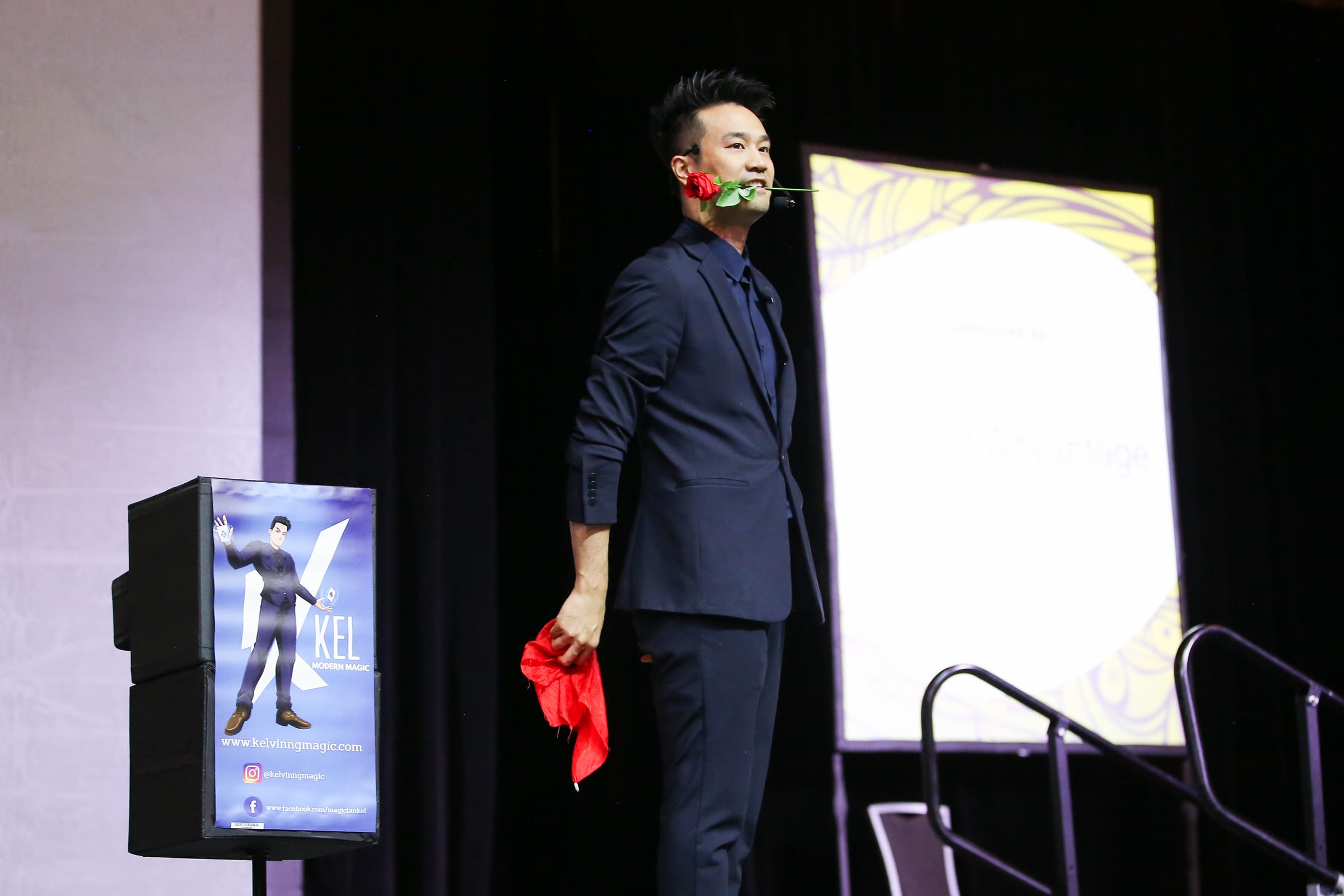
The trade show floor is the other half of the job
The main stage is the visible part. The part that does more work is the floor.
Between sessions, a conference reception or trade show floor has a specific failure mode: delegates form small closed circles with people they already know, and exhibitors stand behind tables waiting for someone to make eye contact. Nobody circulates, because circulating means walking up to a stranger with no reason to.
Close-up magic gives them the reason. I stop with two people, a third joins because a group is forming, and within a minute there are six delegates standing together who arrived separately. When I move on, they are still standing there talking, because they have something to talk about now.
If you have ever paid for a networking break and watched it not happen, this is the mechanism that fixes it. It is also why sponsors and exhibitors like it: a crowd forms near their booth without them having to manufacture one.

What to ask a performer before booking them for a conference
If you are programming a conference and considering entertainment, these are the questions that separate someone who will fit your agenda from someone who will fight it.
- Have you performed for a professional association audience? A performer whose experience is weddings and birthdays will treat your room like a party, and your room is not a party.
- How do you handle volunteers from a senior audience? If the answer involves anyone being embarrassed, keep looking.
- What do you need from AV, and by when? A good answer is specific and early. A vague one becomes your problem on the day.
- What happens if the previous session runs long? It will. You want to hear how they compress, not that they hope it does not happen.
Frequently asked questions
What kind of entertainment works at a conference?
Something visual, short and self-contained. A main-stage set of twenty to forty minutes placed after lunch or before the closing keynote works well, because those are the two points where a conference audience flags. Close-up magic on the trade show floor during breaks works differently but is often the higher-value half.
How long should a conference entertainment slot be?
Shorter than an evening show. Twenty to forty minutes on a main stage is usually right. An after-dinner audience will happily give you an hour; a conference audience mid-programme will not, and asking for it works against you.
Can a magician help with networking at a conference?
That is genuinely the strongest use of close-up magic at a conference. It gives delegates a reason to stand with people they have not met and something to talk about afterwards. Booths and coffee stations do not do this on their own, which is why a scheduled networking break so often is not one.
Do you work around the conference AV setup?
Yes, and the requirements are minimal. For a main-stage set it is a microphone and whatever your existing stage lighting already does. For floor work, nothing at all. The important part is confirming it early with the AV team rather than on the day.