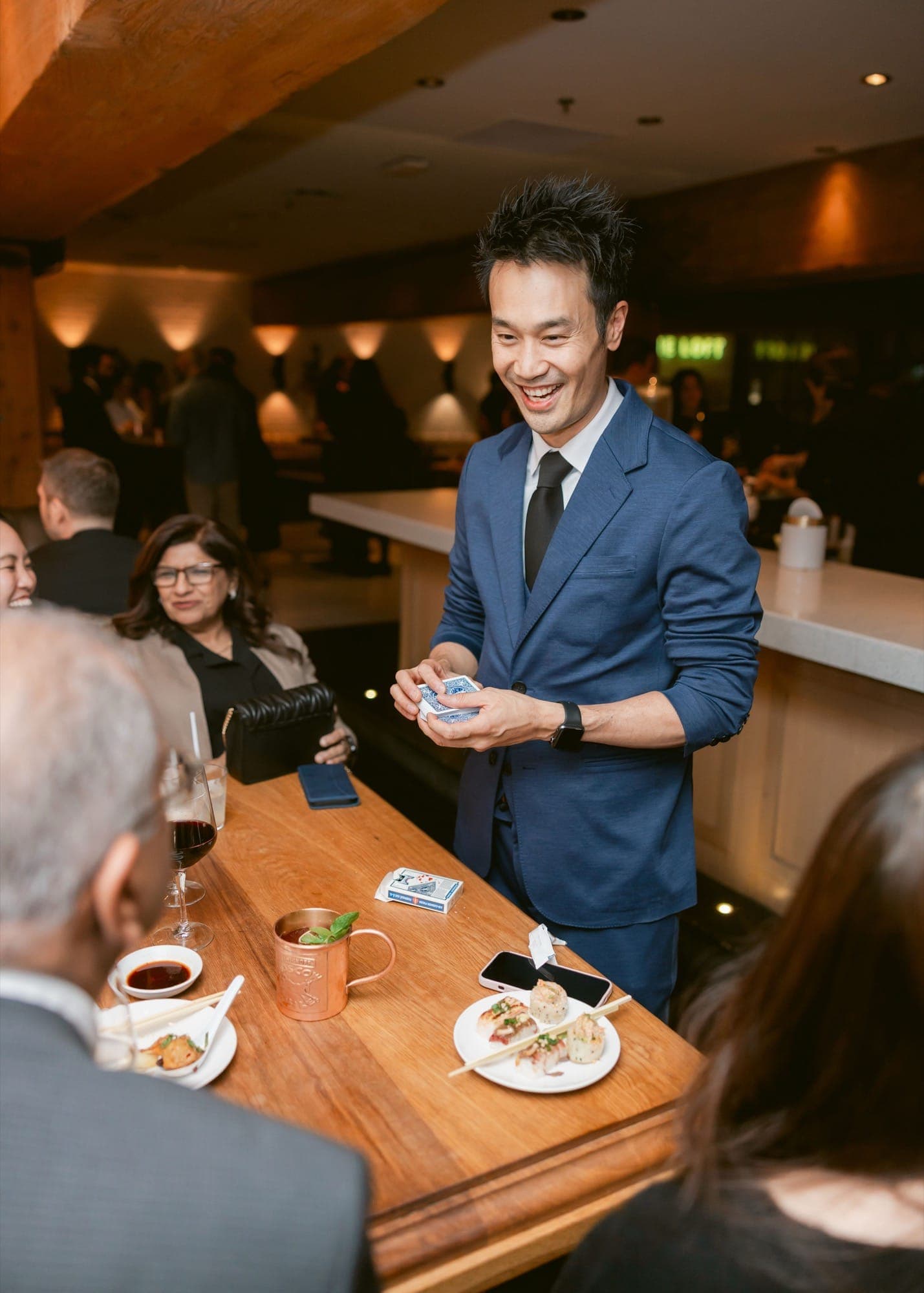

"If the magician's walking between tables, isn't it only that table getting the entertainment?"
A planner asked me that on a call, and it's a sharp question. For a room of 300, it's the right thing to worry about.
Close-up magic is the best kind of magic because it happens in your guests' own hands. It's also the one kind that can't be everywhere at once. So here's how to plan it for a big room.
The number to plan around
Close-up magic reaches roughly 50 guests an hour, one small group at a time. Each group gets a real moment, not a drive-by.
So the math is simple:
- 100 guests: about two hours of mingling covers the room.
- 200 guests: four hours, which is longer than most receptions. Time to combine formats.
- 300 or more: one performer on their own can't reach everyone through a normal cocktail hour.
My goal at every event is to meet everyone. The last thing I want is someone saying, "There was a magician here?" Being honest about the math up front is how that doesn't happen.
Three ways to cover a big room
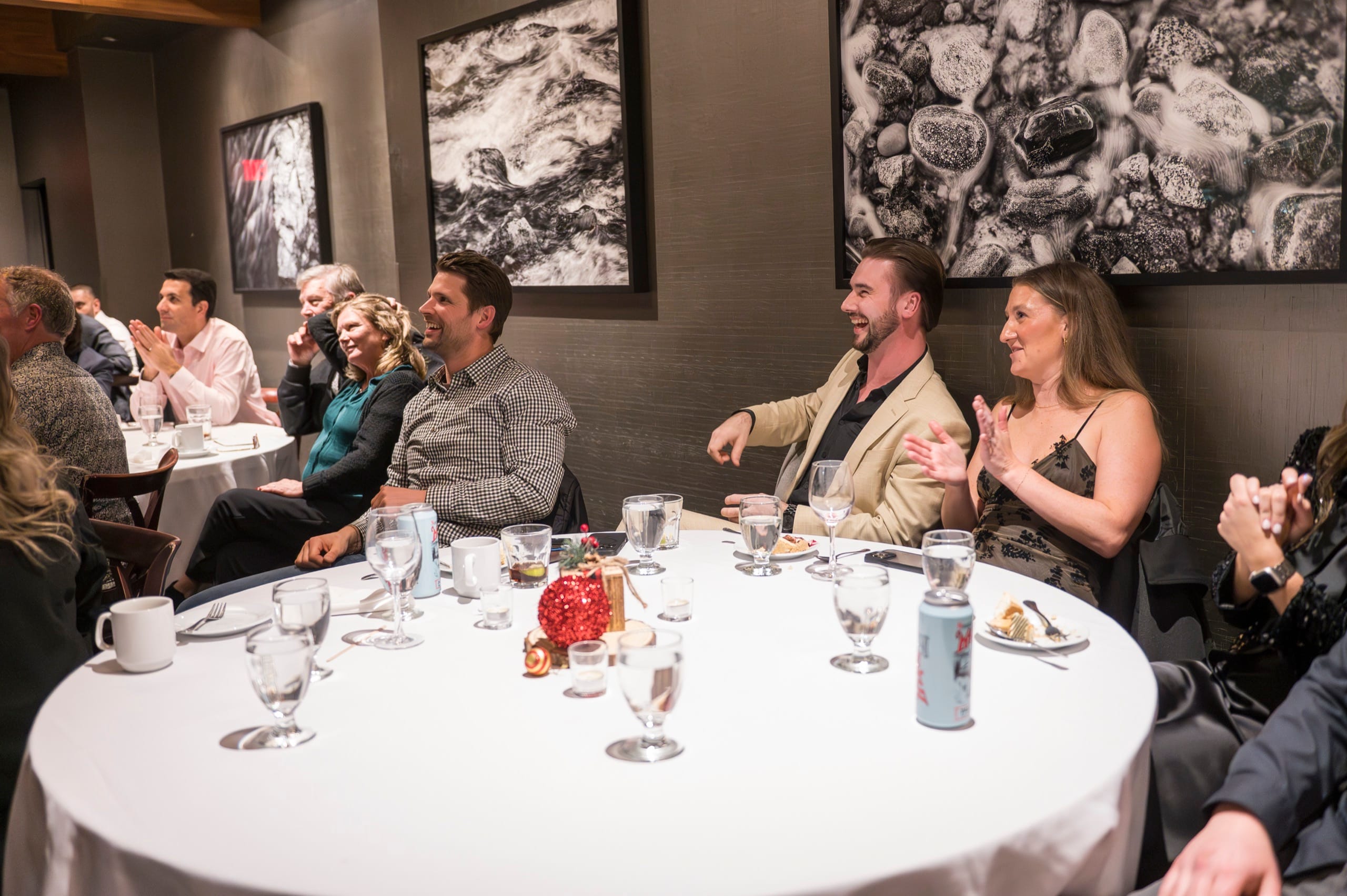
1. Add the stage show. This is the most common answer. Mingling through cocktails gets people talking, then a show after dinner reaches every guest at once. For most rooms of 200 or more, the full evening, mingling plus show, is what I recommend.
2. Stretch the mingling across the night. Cocktails, then table to table as dinner starts, then back into the crowd. Buffet lines are gold here. At an 800-person tech company event, I worked the food lineups so nobody stood bored waiting for a plate.
3. Add a second performer. For a room too big for one person, or two spaces running at once, a second magician who performs under Kel Modern Magic doubles your reach. Same standards, same clean material, coordinated on one plan.
Who to look after first
In a big room, some guests need the magic more than others:
- Plus-ones and spouses who only know a handful of people.
- New hires still learning names.
- Teams that never mix. IT hangs out with IT, accounting with accounting. Magic gives them something else to talk about.
Tell me who those people are and I'll make sure they're not missed.
Room setup for the show
A few things make a big difference when it's time for the show:
- Close the doors, and turn the music off for the show.
- Bring chairs forward so the front isn't an empty dance floor.
- Avoid pillars between the stage and the audience.
- For a room over about 100 people, a riser helps everyone see.
The show itself needs about 8 by 8 feet and basic stage lighting. I plug into your sound system, or bring my own speaker if there isn't one.
Frequently asked questions
How many guests can one magician entertain?
Close-up magic reaches roughly 50 guests an hour, one small group at a time. For 100 guests, plan on about two hours of mingling. For bigger rooms, add a stage show to reach everyone at once, stretch the mingling across the night, or add a second performer.
Do we need two magicians for a 300-person event?
Often, yes, if close-up magic is the main entertainment. One performer reaches about 50 guests an hour, so 300 guests in a normal cocktail hour is too many for one person. The other option is the full evening: mingling for part of the room, then a stage show that reaches everyone.
Can a magician perform during a buffet?
Yes, and it works well. Buffet lines are where guests stand around with nothing to do, so close-up magic in the lineup turns waiting time into a highlight. At an 800-person tech event, Kel worked the food lineups so nobody was left out.
Do we need a stage for a magic show?
Not for close-up magic. For the stage show, an 8 by 8 foot space and basic stage lighting are enough, and for rooms over about 100 people a riser helps everyone see. Kel plugs into the venue's sound system or brings his own speaker.