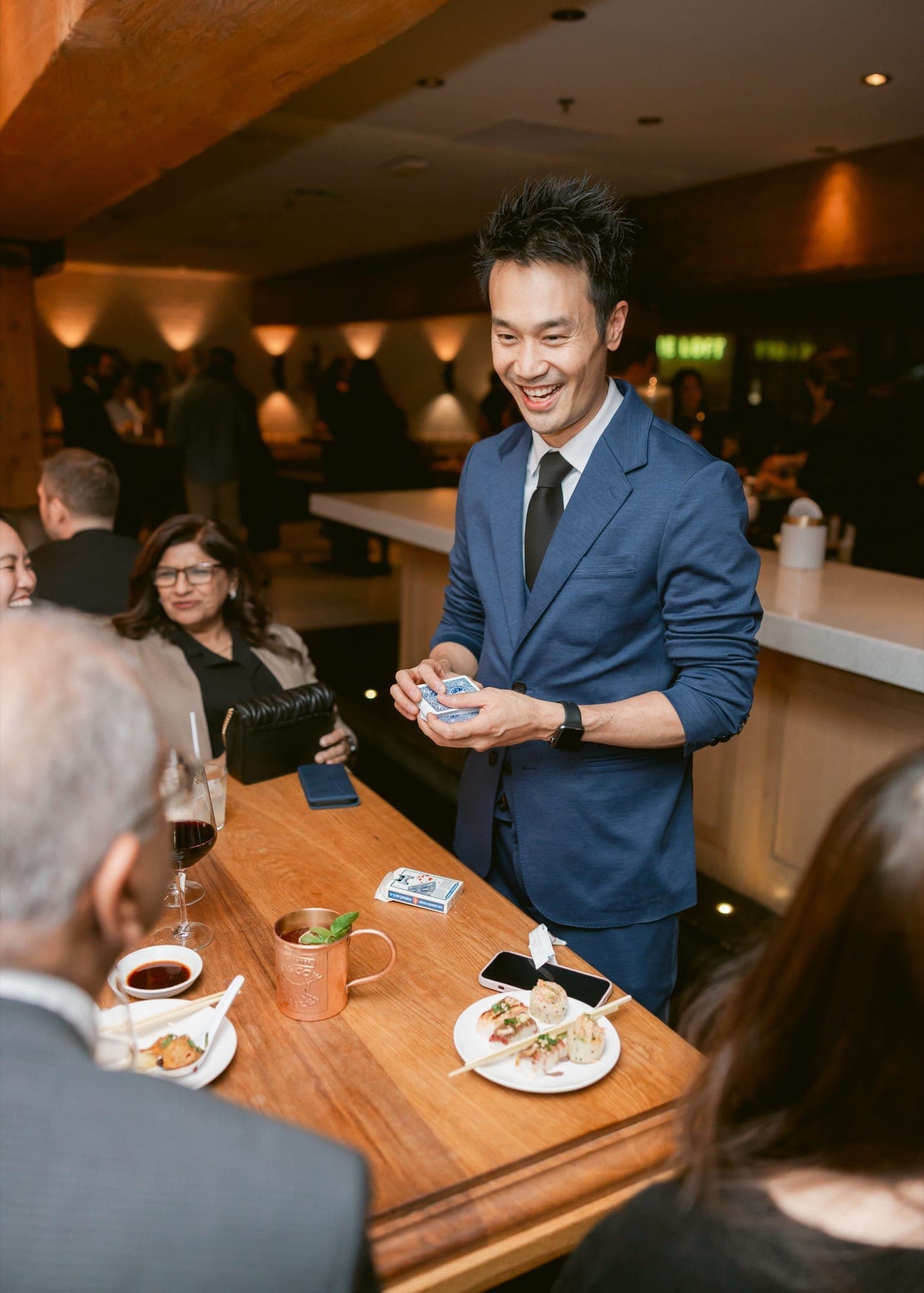
Most of the corporate work I do is a ballroom. Two hundred people, a stage, a plated dinner, a program that has to run on time.
This was not that.
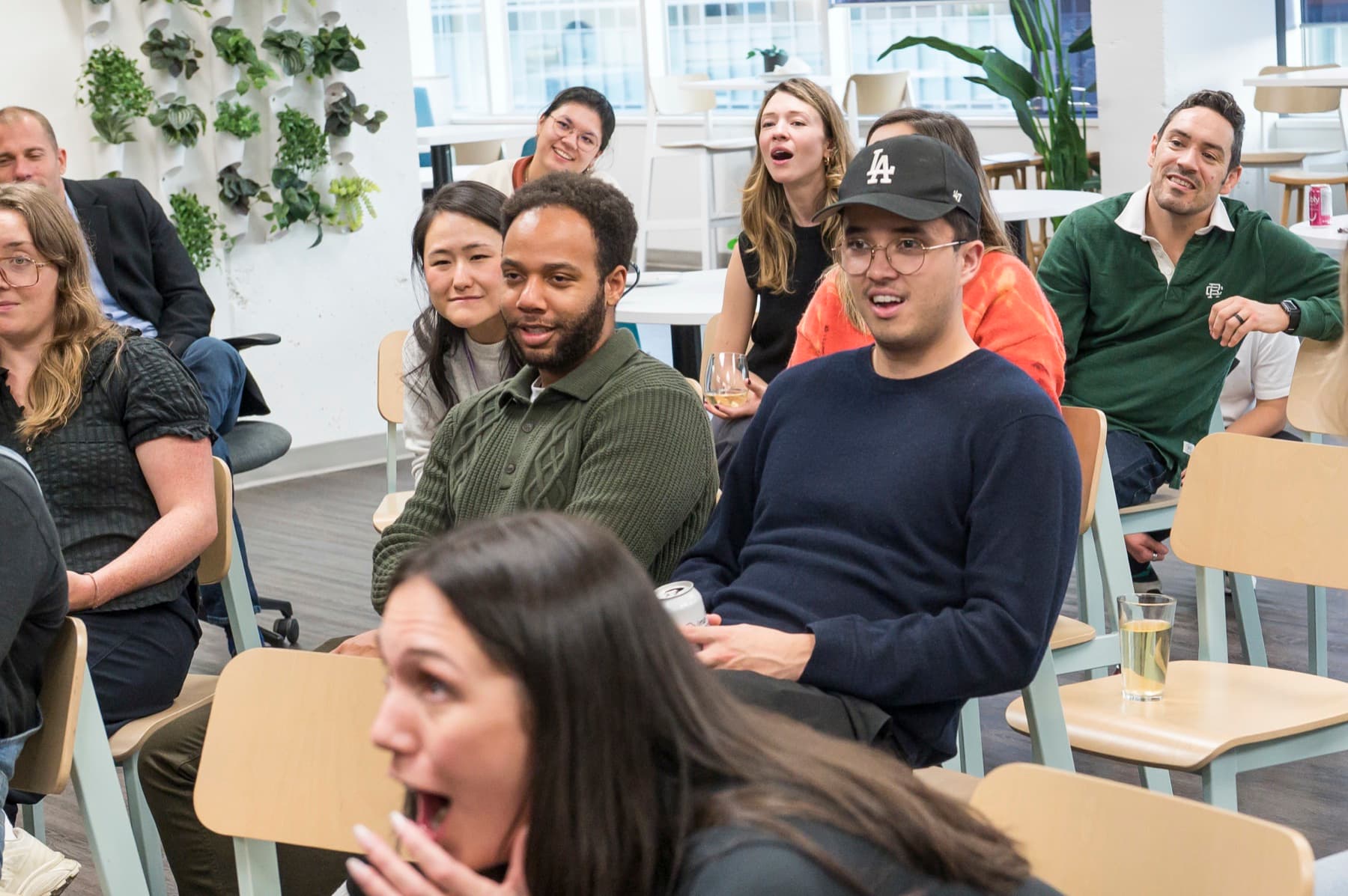
Thinkific booked me for a team happy hour in October 2025, in their own office, for about twenty people. No stage. No dinner. No agenda beyond drinks after work. Just a company that wanted the Friday feeling to actually arrive.
I want to write about it because small internal events are the ones people most often assume are not worth booking entertainment for, and I think that assumption is backwards.
The hard part of an internal event is not entertainment. It's familiarity.
At a client-facing gala, everyone is a little switched on. They are meeting people, they are representing the company, they have a reason to circulate.
An internal happy hour has none of that pressure, which sounds relaxing and is actually the problem. Everyone already knows everyone. The engineering team stands with the engineering team. The people who sat together all day sit together again. Twenty minutes in, half the room is checking Slack and thinking about the drive home.
That is not a people problem. It is a structure problem. Nothing in the room is asking anyone to move.
What forty-five minutes of close-up magic actually did
I worked the room for about forty-five minutes. Close-up, standing, in their hands. No setup, no sound system, no green room, nothing the office had to accommodate.
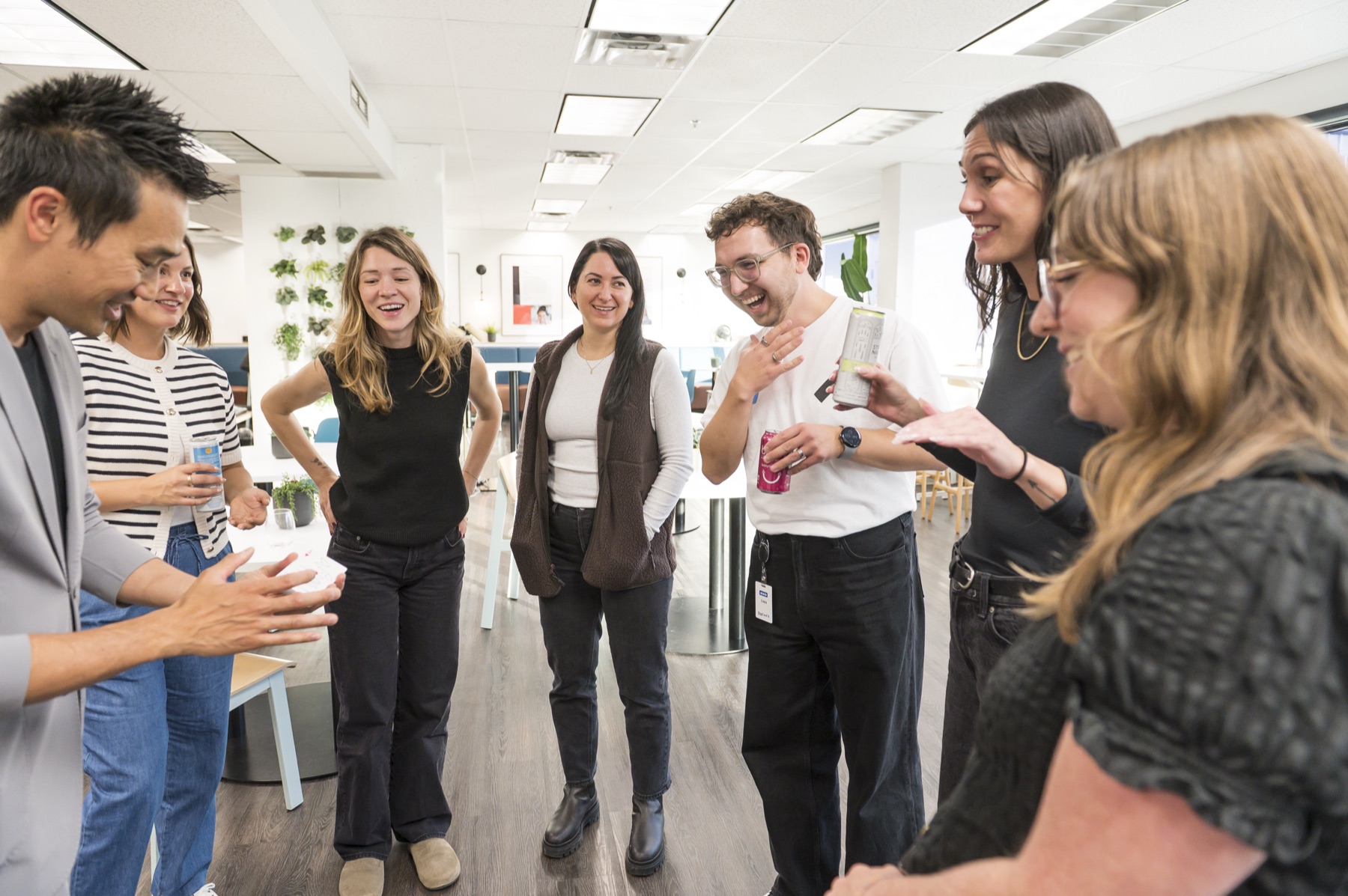
Here is the thing about close-up magic in a small room that a stage show cannot do: the group forms itself. I start with two people. Someone walks past, slows down, and stays. Someone else notices the circle and joins it because circles are magnetic. Within a few minutes there are eight people standing together who did not choose to stand together, and they are having the same experience at the same time.
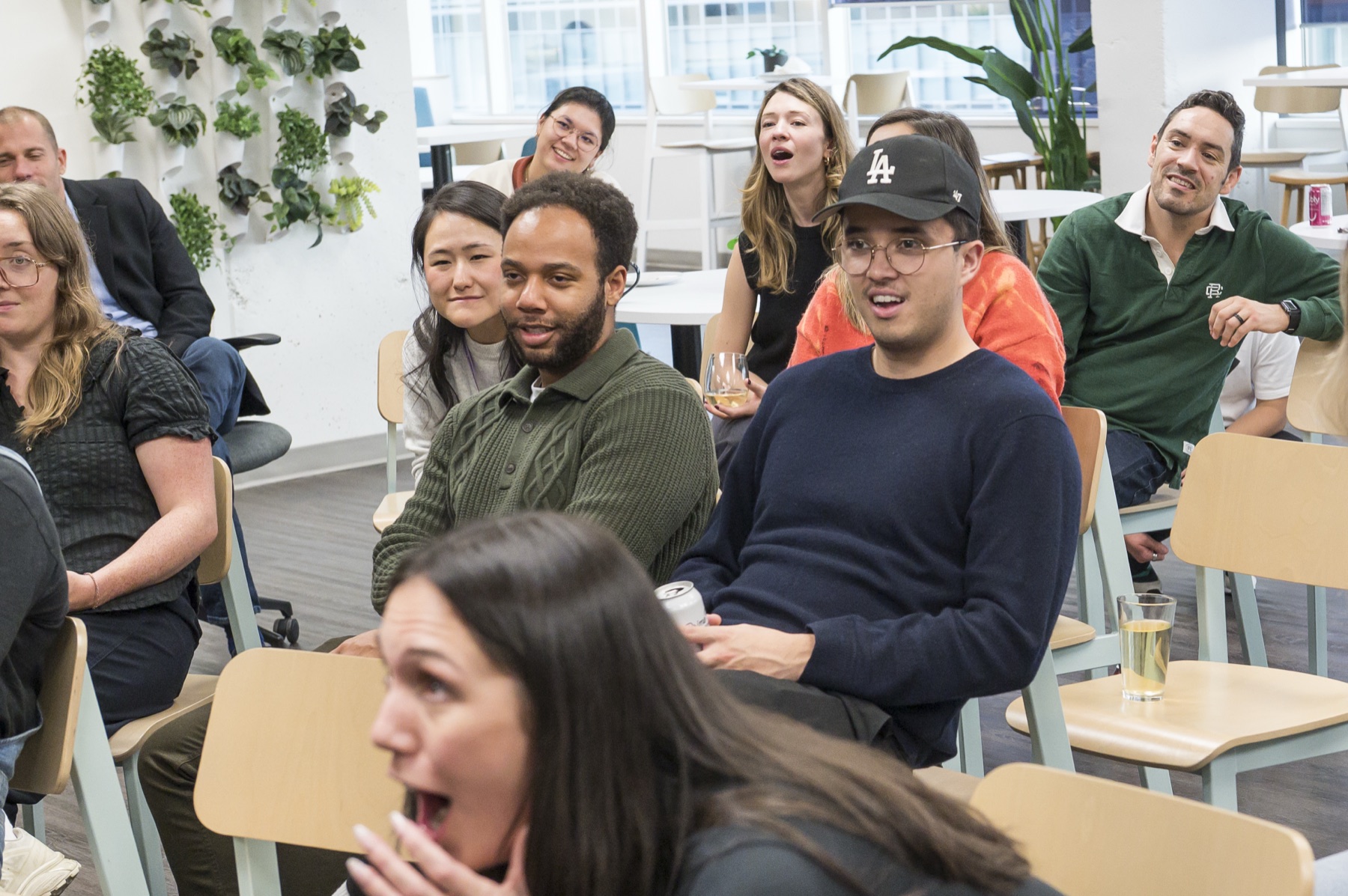
That is the whole mechanic, and it is why I keep saying the value is not the trick. The value is that a room of colleagues who see each other every day get a shared three minutes they did not have before. On Monday they have something to talk about that is not the sprint.
Why the signed card matters more than the reveal
At some point in almost every set, I hand someone a marker and ask them to sign a card.
People think that is about proving the card is theirs. It is partly that. But the real reason is that the moment they put their own handwriting on it, they stop being an audience and start being a participant. Their name is in the trick now. When the reveal lands, it lands on them, not on me.
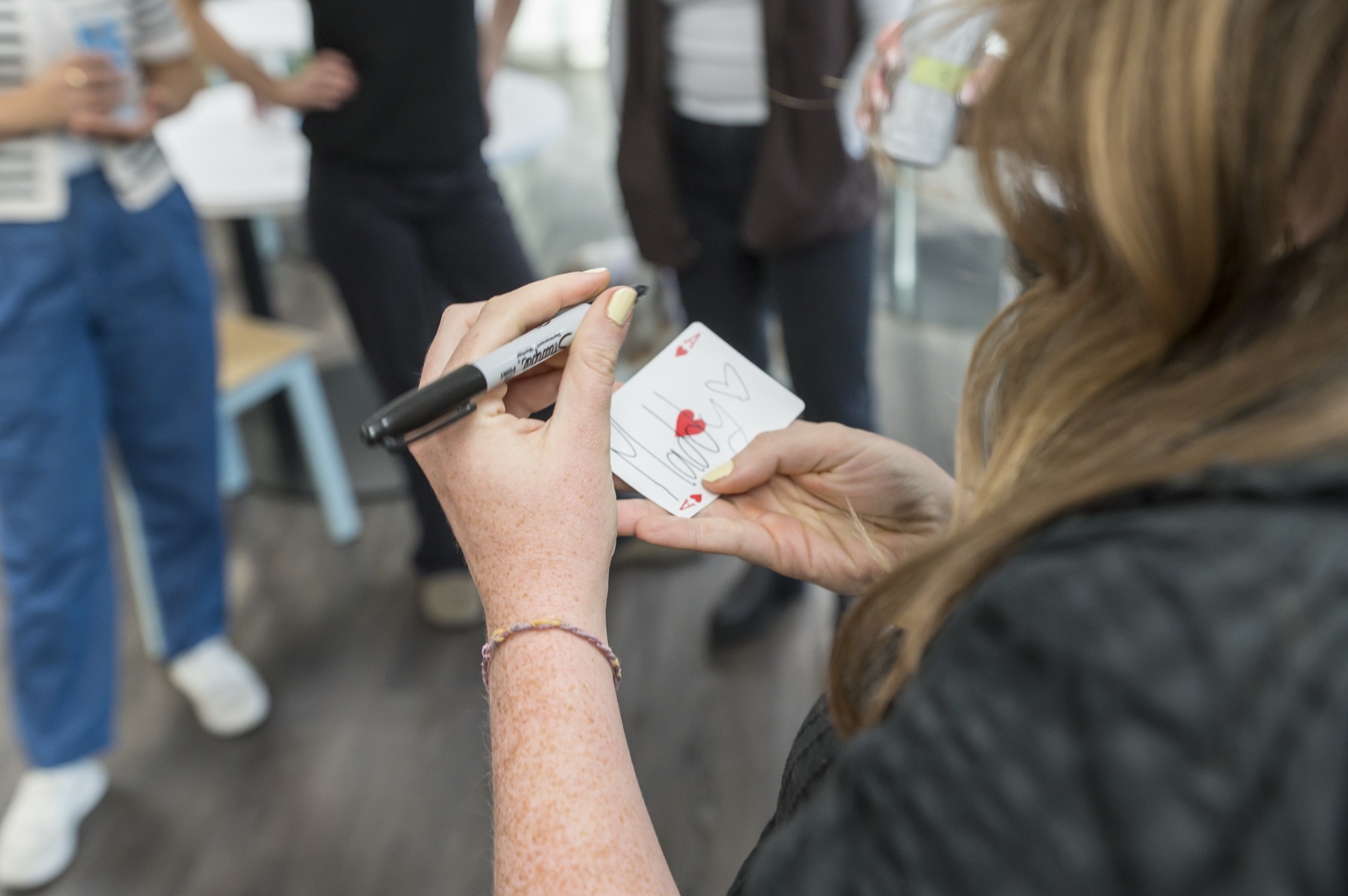
In a room of twenty, that matters enormously. There is no back row to hide in and no reason to want one.
What made this one easy to book
A few things about the format are worth knowing if you are considering something similar for your own team.
It needs nothing from your space. No stage, no AV, no power, no room turnover. I arrive, and about two minutes later I am working. For an office happy hour, where the "venue" is your own kitchen and lounge, that is the difference between possible and not.
It scales down properly. A lot of corporate entertainment is built for a ballroom and gets awkward when you shrink it. Close-up is the opposite. Twenty people is a great number, because everybody gets a proper turn rather than a glimpse.
It has a natural end. Forty-five minutes is enough to reach the whole room twice and leave while the energy is still climbing. Nobody has to announce that the entertainment is over.

Would I recommend it for a team of twenty?
Yes, and more strongly than for some of the bigger events I do.
At two hundred people your entertainment budget is competing with catering, AV, decor and a venue. At twenty, entertainment is close to the whole experience. There is no room design to hide behind. Either something happens in that room or people finish their drink and leave.
If you are planning a team social, an all-hands wrap, a summer party or a quarterly get-together and you are wondering whether it is "too small" to bother, it is not. Small is where this format is strongest.
Frequently asked questions
How long should close-up magic run at an office happy hour?
For a group of fifteen to thirty, forty-five minutes to an hour is right. That is long enough to reach everyone properly and short enough to end on a high. Larger groups need more coverage, usually 1.5 to 2 hours, because the room takes longer to work through.
Do you need a stage or sound system for an office event?
No. Close-up magic is entirely self-contained. It happens standing, in guests' hands, with no microphone, no lighting and no setup. That is the main reason it suits offices, restaurants and spaces that were never designed to host a show.
Is magic too casual for a corporate audience?
It depends entirely on who is performing. What makes it corporate is the read on the room, not the material. Twenty-five years of company events means knowing exactly which moments call for comedy and which call for restraint, and knowing that "family friendly" means the CFO laughs as hard as the newest hire.
Photography for this event by J Chan Photography.