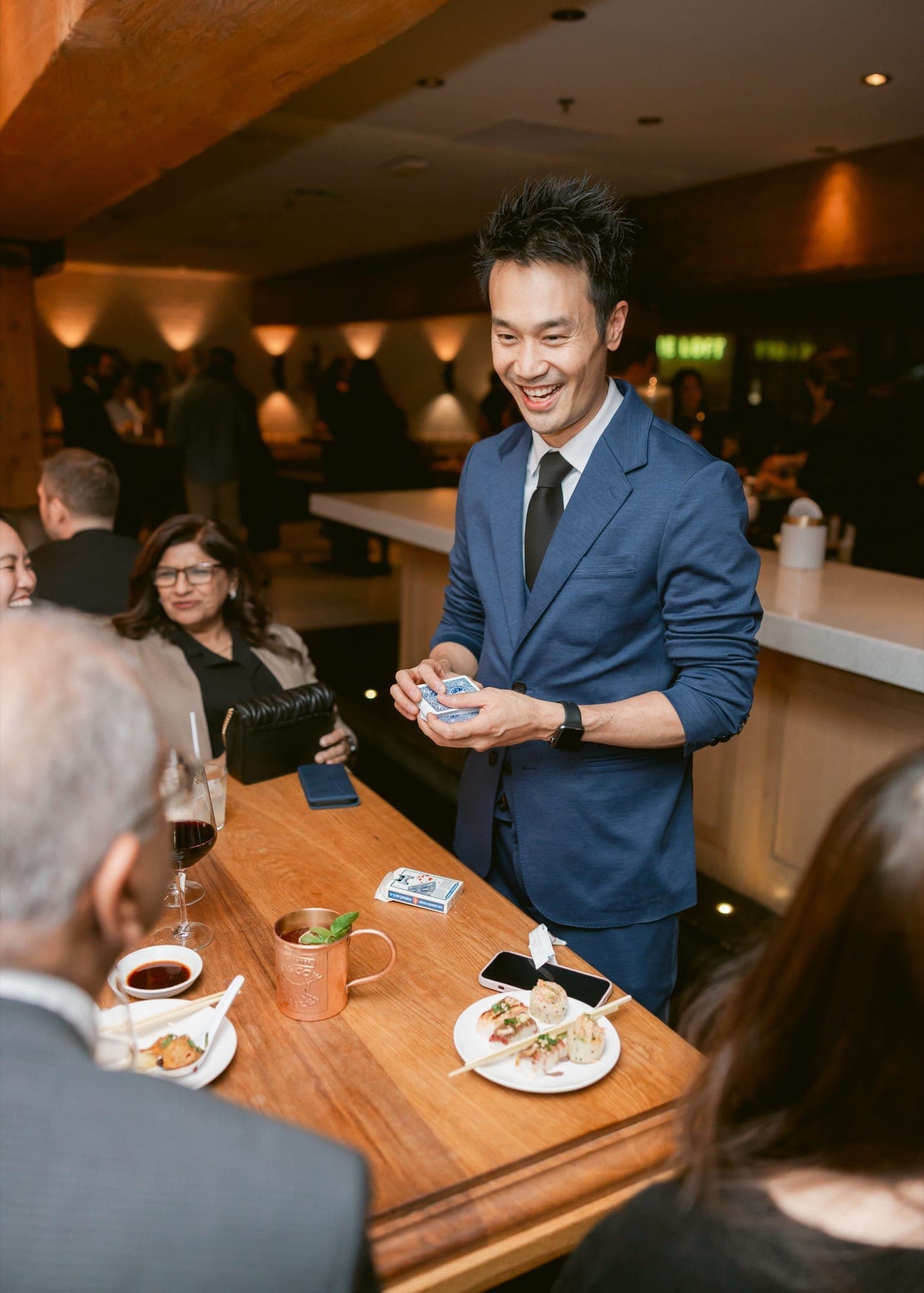
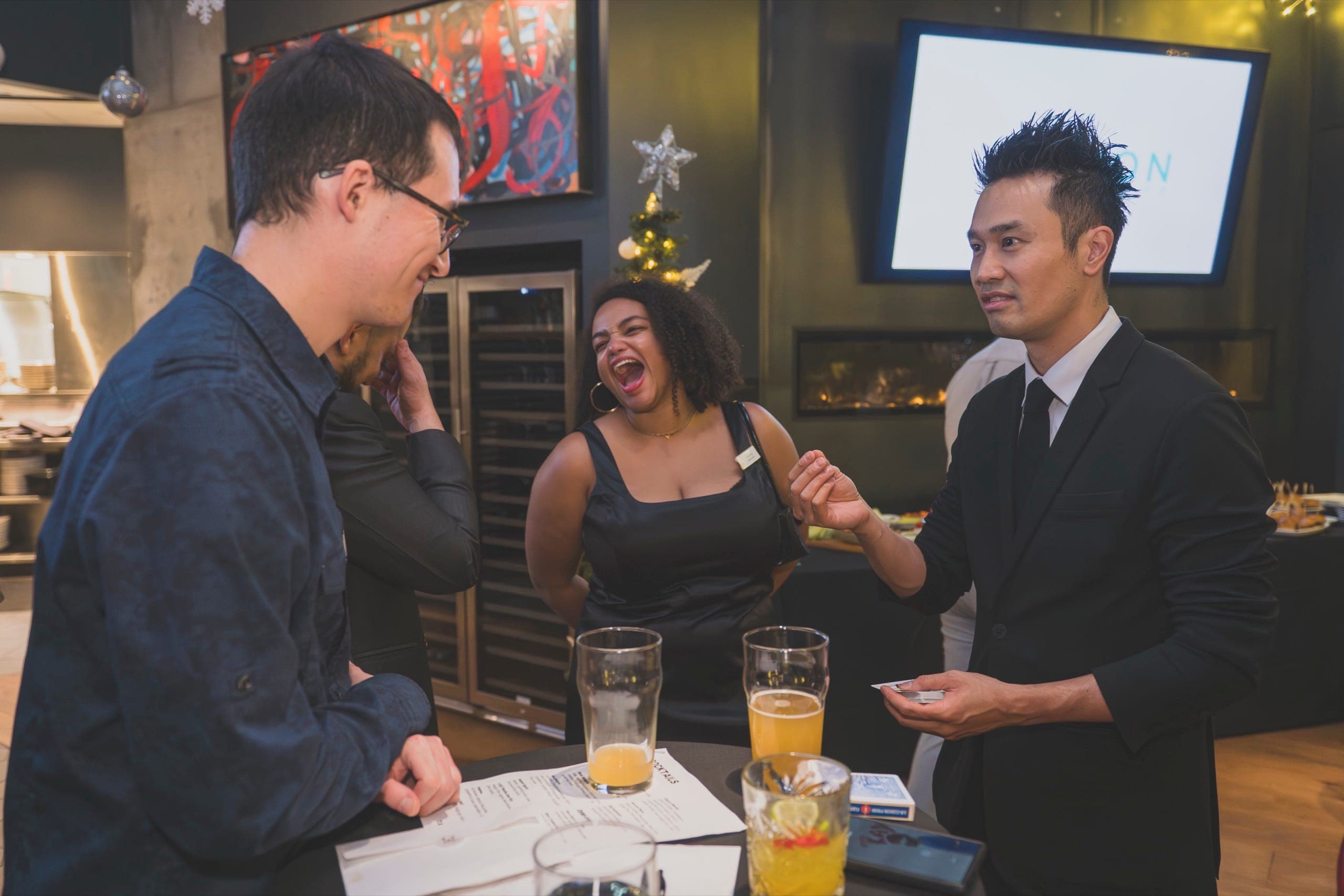
Between 4:45 and 6:15, most corporate events in Vancouver are quietly failing.
The room is full. The bar is open. The food is good. And the whole thing is flat. Small clumps of people who arrived together, standing where they landed, talking to the person they sit near at work. Nobody moves. The volume never rises.
Then dinner is called, everyone sits with the people they were already standing with, and the night carries that temperature the whole way through.
I have watched this happen hundreds of times, and I want to be precise about why it happens, because the fix follows from the cause.
The cause: nothing in the room asks anyone to move
A cocktail hour is the only part of your event with no structure. Dinner has seating. The programme has an order. The show has a start time. The reception has a bar and a hope.
So people do the rational thing. They stand with whoever they arrived with, because crossing a room to introduce yourself to a colleague from another department is socially expensive and there is no reason to pay it.
That is not shyness. It is the absence of a reason. Every fix below is really the same fix: give people a reason to be somewhere they were not.
Six things that work
1. Kill the head table's gravity. If executives cluster near the entrance, the room organises around them and everyone else stays back. Ask your leadership to spread out and to be the ones who cross the room. It costs nothing and it changes the shape of the whole reception.
2. Move the food away from the bar. The single cheapest intervention there is. If food and drink are in the same corner, half your room never leaves that corner. Put them at opposite ends and people have to walk, and walking is where they bump into someone.
3. Fewer, smaller high tables. Not enough surfaces and people cling to the walls. Too many and everyone camps at one for ninety minutes. High tables that fit three or four, scattered in the middle, keep groups small and porous.
4. Give the room a reason to circulate. A silent auction, a station people have to visit, a passport card stamped at three points. Anything that makes standing still slightly less comfortable than moving.
5. Send roaming entertainment to the guests. This is the one I do, so weigh it accordingly, but the mechanism is worth understanding whether you book it or not.
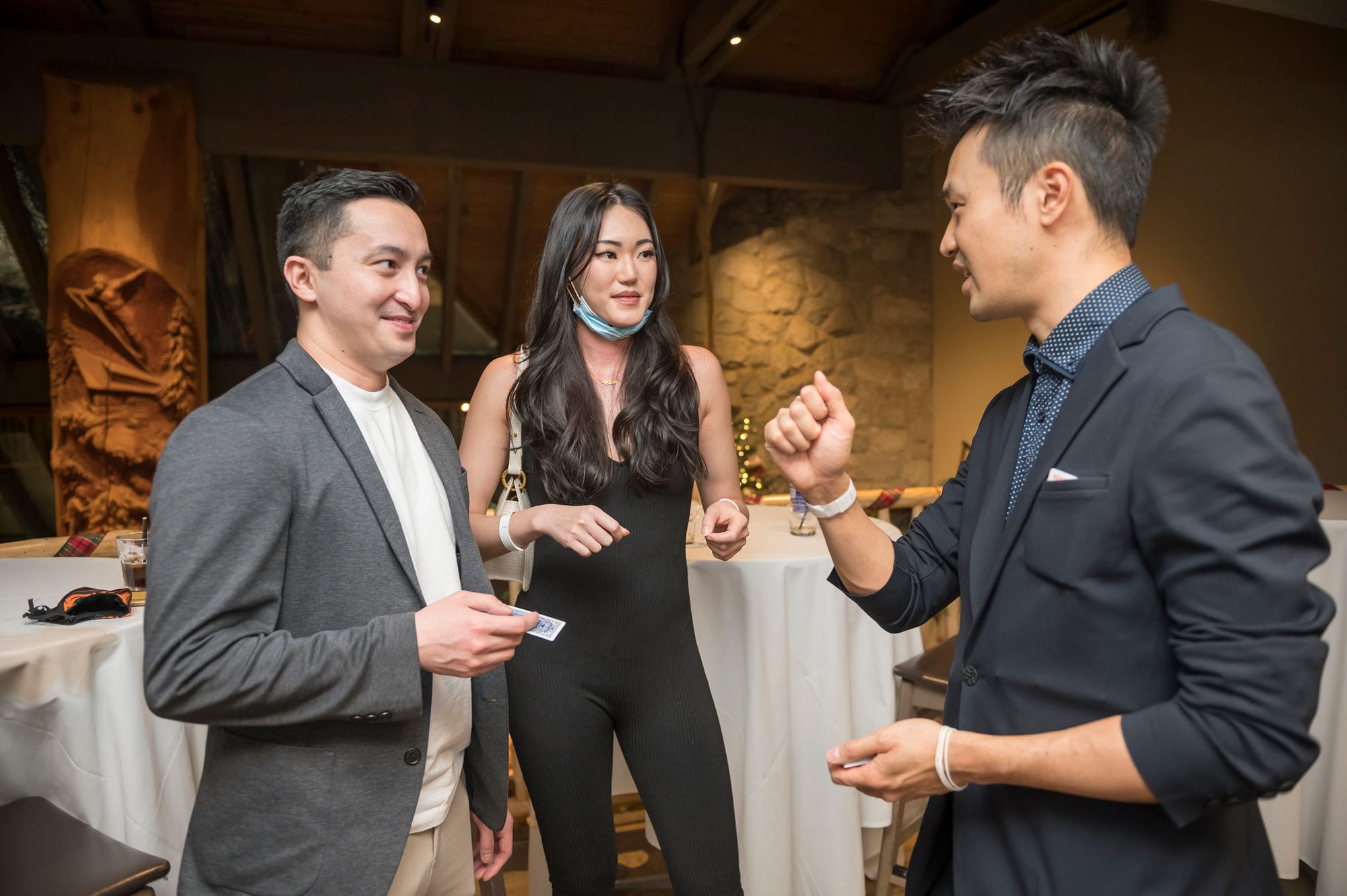
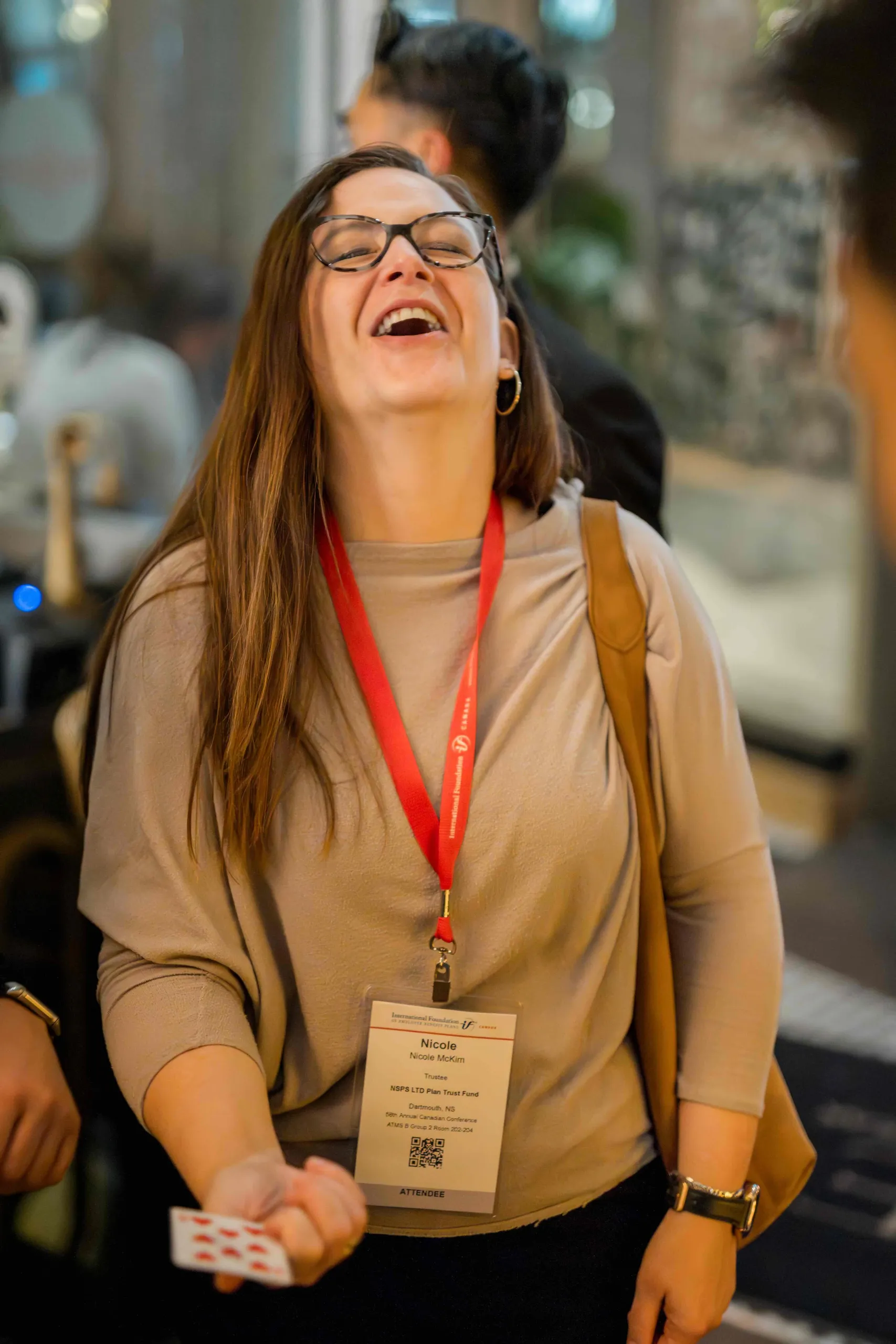
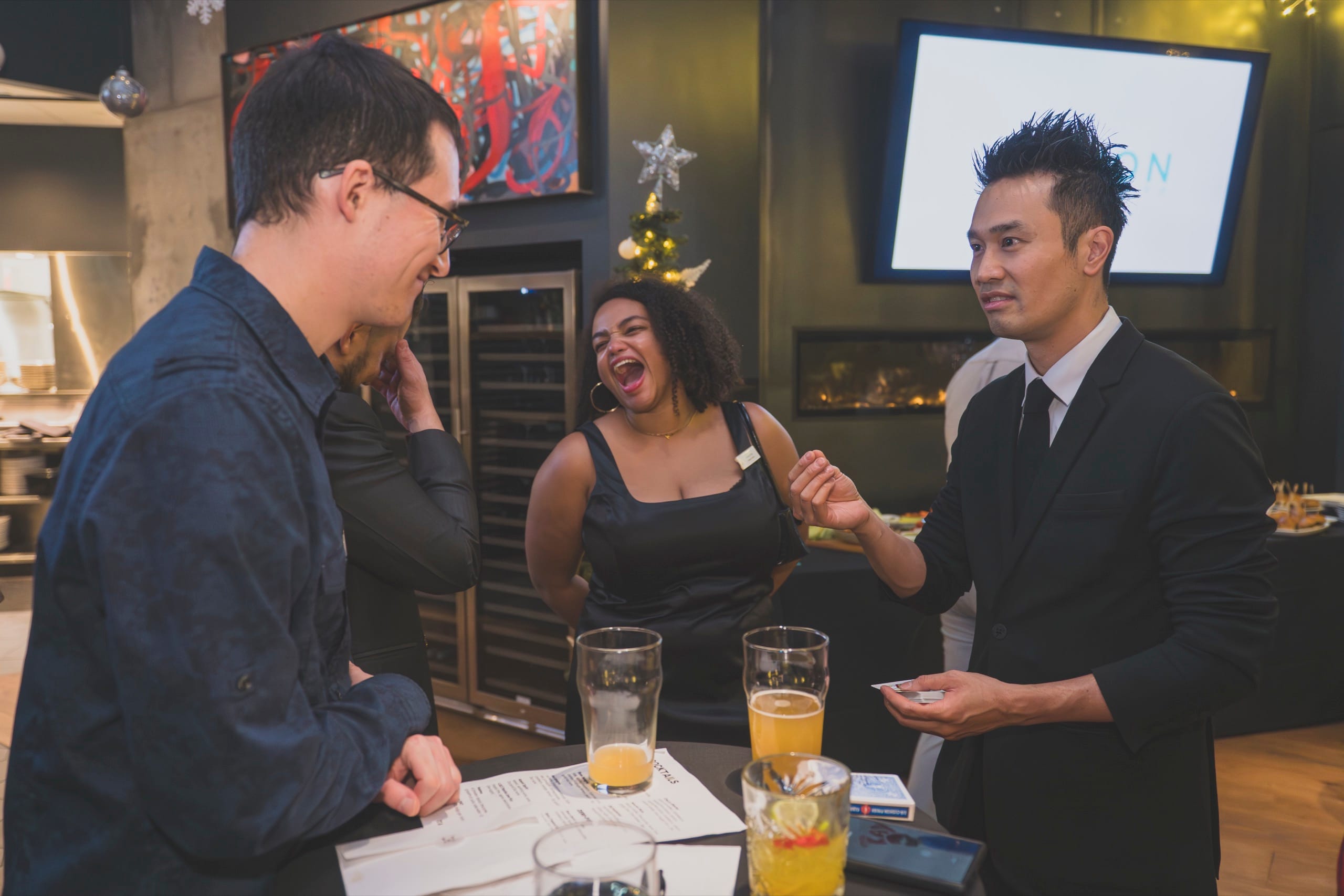
Everything else on this list waits for guests to come to it. A bar, a photo booth, a station, a band on a riser — all of them require the guest to decide to walk over. Roaming close-up magic inverts that. It goes to the two people standing awkwardly by the window, and within ninety seconds there are six people standing there, because a forming group is magnetic in a way an empty station is not.
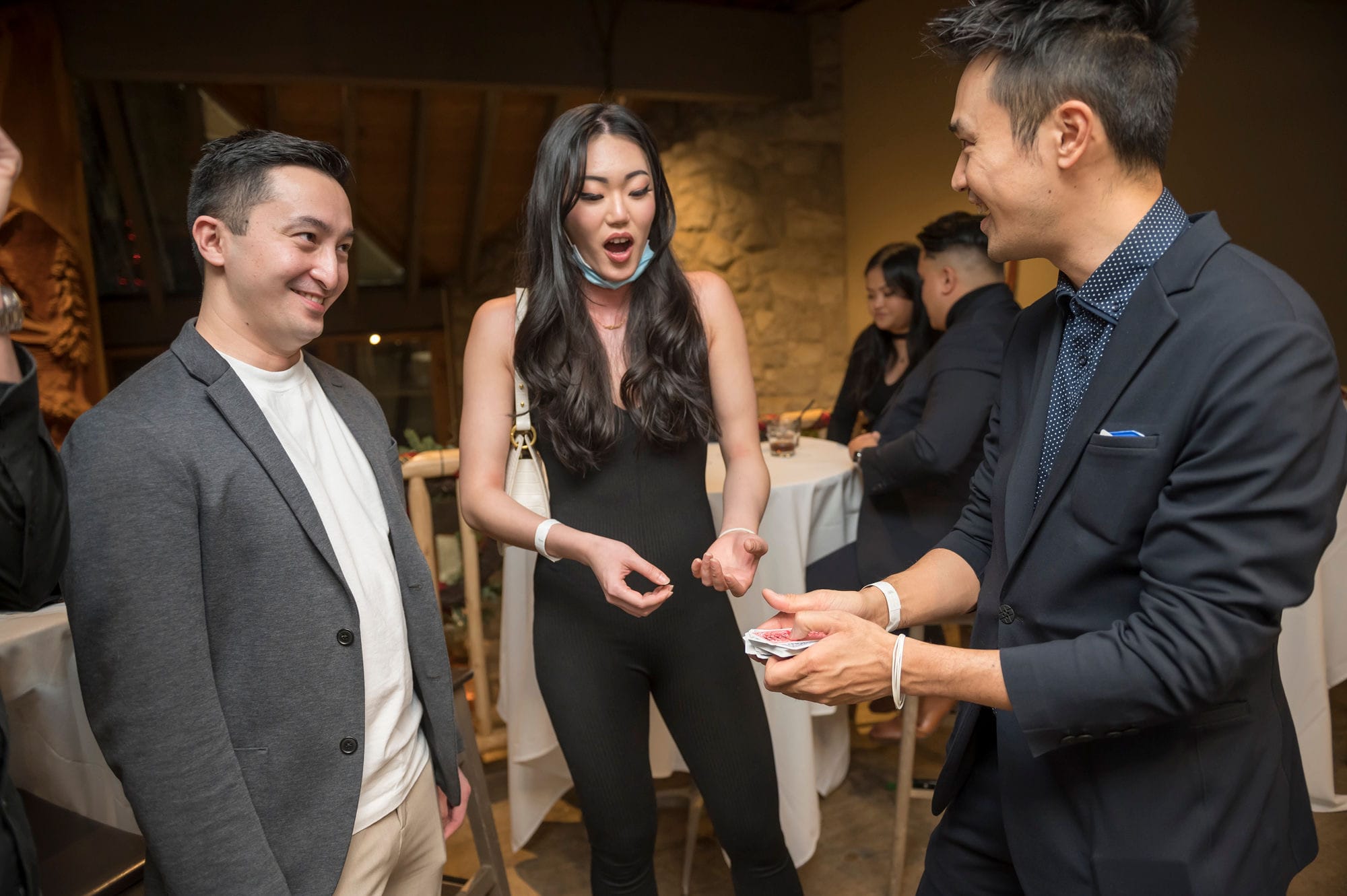
The reason it fixes the specific problem is that the group it forms is made of whoever happened to be nearby, not whoever arrived together. Two people from finance, someone from the Calgary office and a client's plus-one end up reacting to the same thing at the same time. They now have a conversation opener that neither of them had to invent.
6. Shorten it. Ninety minutes is a long time to hold a room with nothing scheduled. If your reception is running long because dinner service is slow, that is a catering conversation, not an entertainment one. Seventy-five minutes with something happening beats ninety with nothing.
The one that does not work
Background music alone. It makes an empty room feel less empty, which is worth something, but it does not move anybody. A DJ at 5pm is playing to a room that will not dance for another four hours. That is not a criticism of DJs — it is the wrong tool for this specific ninety minutes, and it is the most common thing I see booked for it.
Why this hour is worth the attention
Because it sets the temperature for everything after it.
A room that mixed during cocktails sits down warm. The speeches land better, the awards get real applause rather than polite applause, and the dance floor fills earlier because people already know more of the room. A room that stood in silos for ninety minutes sits down in silos, and you spend the rest of the night trying to recover ground you did not need to lose.
Most companies allocate their entertainment budget to the last hour of the night. The last hour largely takes care of itself once people are warm. The first hour is where the evening is actually won.
Frequently asked questions
How long should a corporate cocktail hour be?
Seventy-five to ninety minutes is typical, and ninety is only a good idea if something is happening. If your reception is stretching because dinner is behind, fix the catering timeline rather than asking guests to stand for longer.
What entertainment works best during a cocktail hour?
Anything that goes to the guests rather than waiting for them. Roaming close-up magic is the clearest example, because it forms groups where people are already standing. Stationary options — booths, bands, stations — all depend on guests choosing to walk over, which is the exact behaviour that is missing.
Do we need entertainment during the reception if we already have a show later?
They solve different problems. The show is a peak; the reception is a temperature. A great after-dinner show cannot retroactively warm a room that spent ninety minutes in silos, and the show itself plays better to a room that has already loosened up.
How do you get people to mix at a company party?
Give them a reason to be somewhere they were not: separate the food from the bar, keep high tables small, ask leadership to spread out, and put something in the room that forms groups rather than waiting for them. Mixing is a structure problem, not a personality one.