
A milestone birthday has a guest list that no other event has.
At a wedding, everyone is there for the couple and there is a structure carrying the day. At a company party, everyone shares an employer. At a fortieth, you have three colleagues, four friends from university, two cousins, a neighbour, someone's new partner nobody has met, and both parents.
None of those groups know each other. All of them love the same person. And that person is going to spend the entire night being pulled from one conversation to the next without finishing any of them.
That is the actual problem to plan around, and it is the same at thirty as at sixty.
The mistake: planning the party around the guest of honour
The instinct is to build the night around them. A slideshow of their life, speeches from everyone, a big reveal.
The trouble is that this makes the room an audience and the birthday person a performer. They spend the evening being looked at rather than being with people, and everyone else spends it watching rather than mixing.
The better frame: plan the night so the guests connect to each other. The person whose birthday it is then gets to move through a room that is already working, rather than being the only thing holding it together.
What works, by decade
The decades genuinely differ, and not in the way people assume.
Thirtieth. Highest energy, latest finish, most likely to be at a bar or a rented space. The guest list is mostly friends and colleagues of a similar age, so mixing is easier. Lean into late-night: good music, a proper drinks plan, something photographable.
Fortieth. The hardest one to plan and the most interesting. Small children are usually in the picture, which caps the finish time and adds an age range. Half the room wants a real night out and half needs to relieve a babysitter. Plan an evening with a clear peak around 8pm rather than one that assumes everyone is there until one.
Fiftieth. Widest guest list. Parents, adult children, colleagues of thirty years, friends from every era. Often the most emotional, and the one where speeches actually land. Give the programme real thought and keep it short.
Sixtieth and beyond. Often multi-generational with grandchildren present, frequently earlier in the day, and volume matters more than people expect — a loud room excludes anyone with hearing difficulty, which at this event is a real portion of your guests.
Ideas that solve the mixing problem
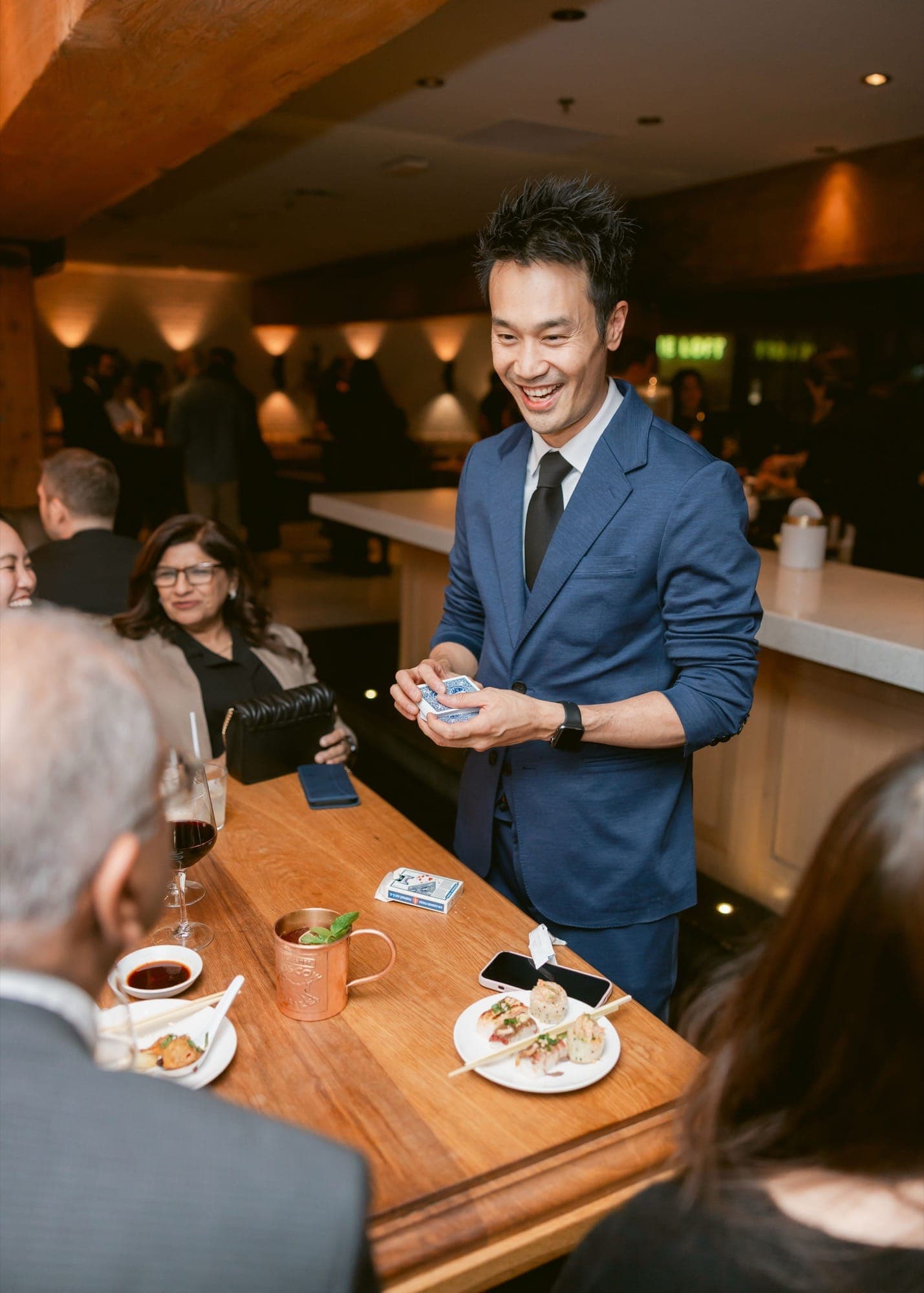
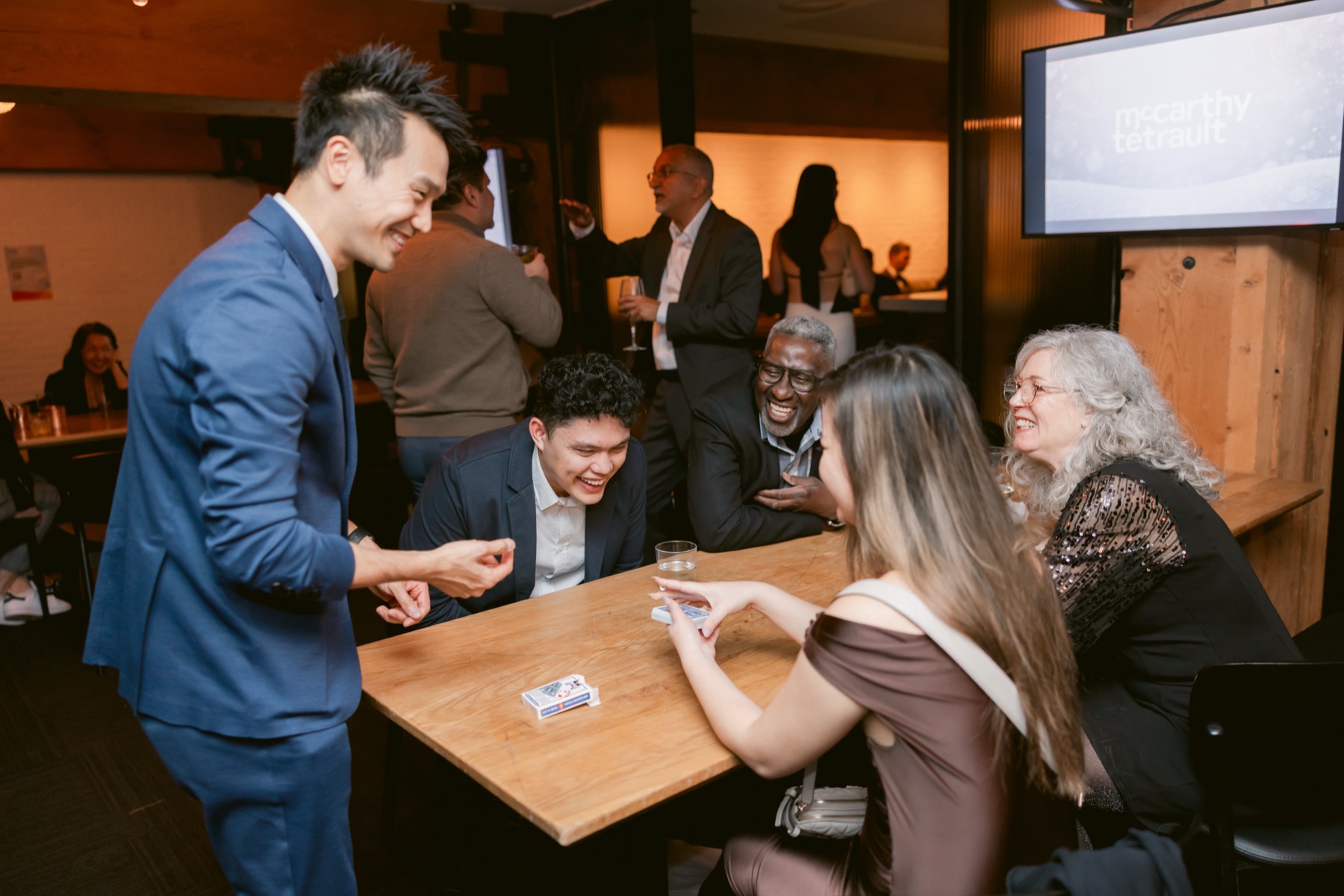
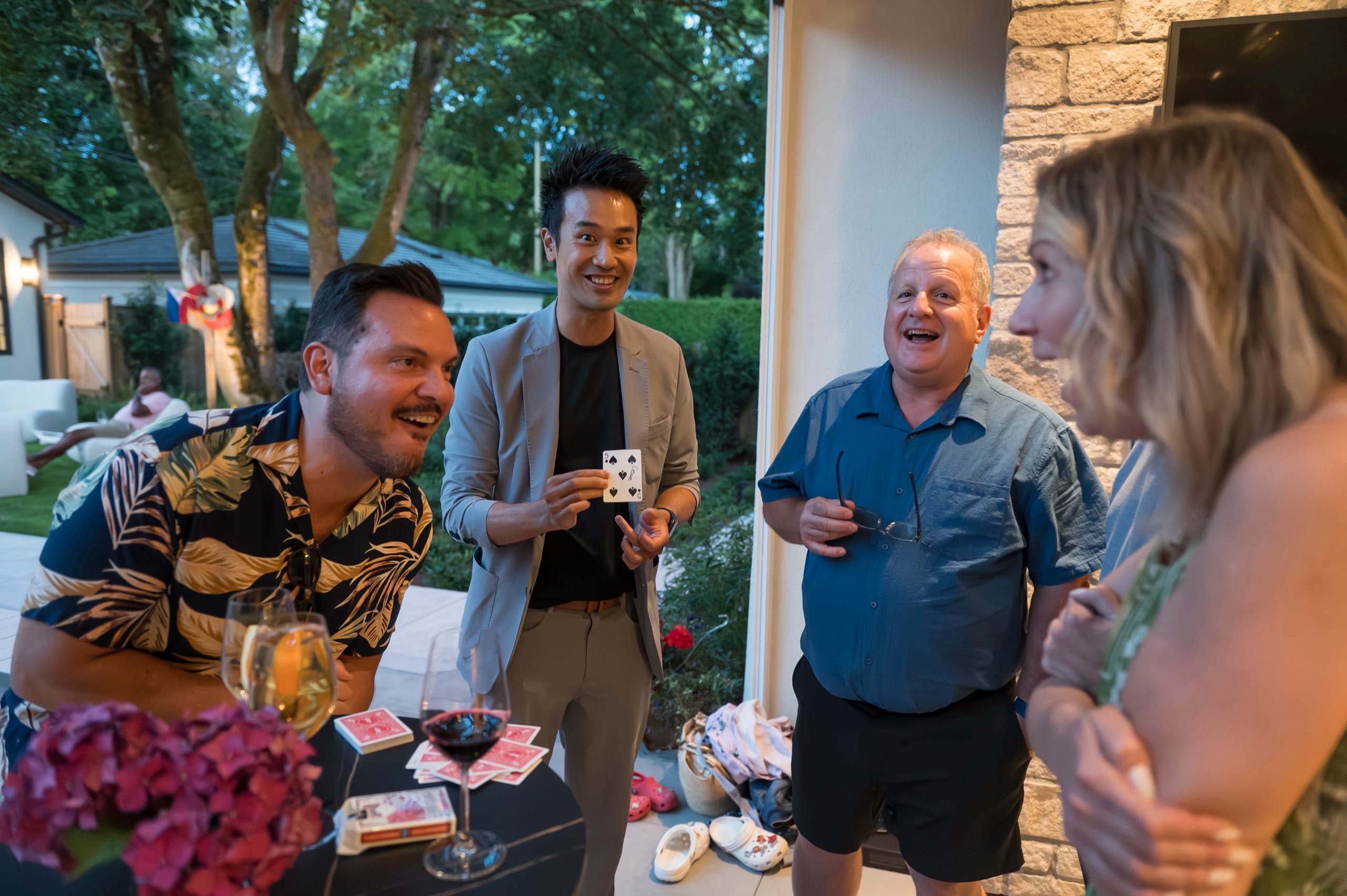
Roaming close-up magic. My own line of work, so weigh it accordingly, but the mechanism fits this event particularly well. It forms small groups out of whoever is standing near each other, which is exactly what a room of four separate social circles needs. A university friend and a work colleague end up reacting to the same thing, and they have a conversation opener neither had to invent.
It also handles the age spread better than most things. A stage act asks a mixed-age room to sit and watch together, which is a lot to ask when your guests span sixty years. Close-up meets each group where they are.
A "how do you know them" prompt. A card or a badge, or just an MC who asks it. Sounds small; it is the single cheapest way to make cross-circle conversation start.
Stories rather than speeches. Three people, two minutes each, told to bring one specific story rather than a tribute. Speeches sag; stories do not.
A memory wall. Photos from every era with space to write. It gets people from different circles standing together pointing at the same picture and explaining who is who.
A food format that makes people move. Stations rather than a seated dinner, unless the guest list is small enough to be one table.

Practical things worth deciding early
Is it a surprise? If so, the logistics change entirely — arrival timing, who knows what, and where everyone hides. Surprises are wonderful and they are twice the planning.
Home or venue? A home is warmer and cheaper and someone has to clean it. A venue costs more and removes every logistical worry. At more than about forty guests, most homes stop being comfortable.
How long is the "party" part? Milestone birthdays often run longer than anyone planned because nobody wants to be first to leave. Have a natural end point in the run sheet, even if you never use it.
Kids or no kids. Decide, then tell people clearly on the invitation. Ambiguity here causes more friction than any other planning question.

The one thing worth spending on
If the budget is tight, spend it on whatever gets the room mixing in the first hour.
Everything else — the cake, the decor, the playlist — improves a party that is already working. Nothing on that list rescues a room where four groups stood separately all night, and no amount of good food fixes the photo of your best friend's fiftieth where everybody is standing in the group they arrived with.
Frequently asked questions
What is good entertainment for a 40th birthday party?
Something that works across a wide age range and does not require everyone to sit and watch at once. Roaming close-up magic suits it well because it meets small groups where they are, which matters when half your guests are leaving at nine for a babysitter.
How do you get guests who do not know each other to mix?
Give them a reason to be standing together. Prompts like "how do you know them," food stations rather than seated service, and roaming entertainment that forms groups all work. Left alone, guests stay in the circle they arrived with.
Should we do speeches at a milestone birthday?
Keep them short and ask for stories rather than tributes. Three people at two minutes each, each bringing one specific story, beats six people speaking generally — and it is far kinder to the person being talked about.
Is a magician appropriate for an adult birthday party?
Yes, when the material is written for adults. The thing to check is who the performer usually works for: someone whose week is children's parties will bring the wrong energy to a fiftieth, regardless of skill.