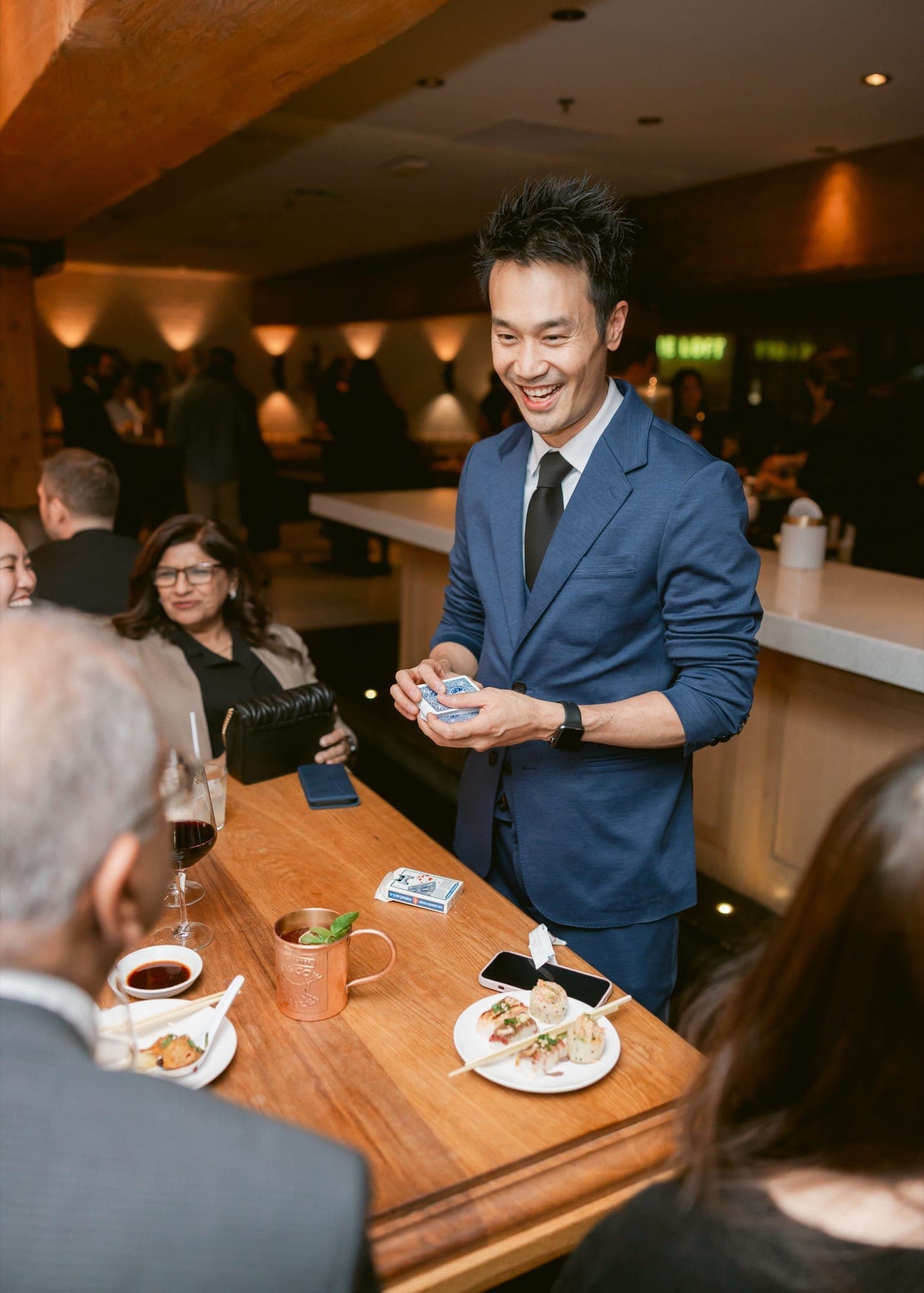
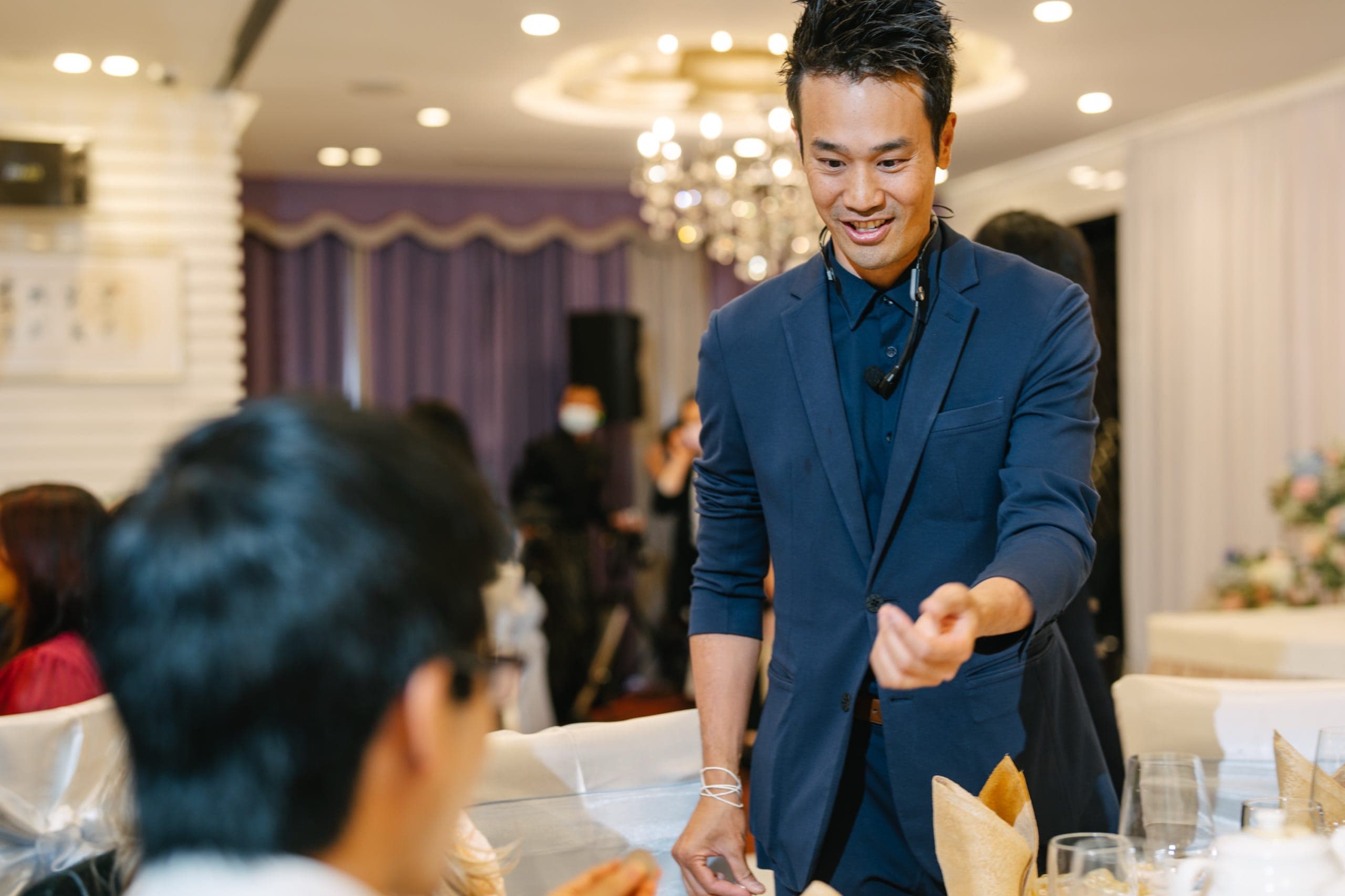
Jennifer and Robert had eighty guests at Chef Tony in Richmond on 18 June 2023. Small by Chinese banquet standards, which people assume makes an evening easier to run. It does not. It makes every gap more obvious.
They booked in October, eight months ahead, and when it came to choosing a package Jennifer's answer was short: "I would like to book Kelvin for everything."
So I did all three jobs that night: hosted as MC, worked the room with close-up magic, and performed a show. One person, one contract, one voice guiding the evening.
It is one of my favourite nights to point to when someone asks why the combination matters, so let me explain what it actually solved.
The specific problem with a banquet timeline
A Chinese wedding banquet runs on a course structure, not a programme. Ten courses come out when the kitchen says they come out. That is not a flaw, it is how the format works, and it means the evening has a rhythm nobody in the room controls.
What that creates is a series of gaps. Not big ones. Four minutes here while plates are cleared, six there while the next course plates up, a longer stretch while the tea ceremony resets or the couple change outfits. Each one is short enough that nobody plans for it, and long enough that the room's volume drops and people reach for their phones.
Multiply that by ten courses and you have most of an evening.
Why one person doing all three jobs fixes it
If you hire an MC and an entertainer separately, every one of those gaps is a handoff. The MC has to fill, or find me, or announce something. It works, but you can feel the seams.
When the person on the microphone is also the person doing the magic, the seams disappear. I am not waiting to be introduced. I can see the kitchen door from where I am standing, know the next course is four minutes out, and use the four minutes rather than announce that we are waiting.
That is the whole argument, and at eighty guests it is more valuable than at three hundred. In a big ballroom the room's own noise carries a lull. In an intimate room, everybody hears the silence.
The part that matters most: two families who do not share a language
This is the reason I keep saying close-up magic belongs at multicultural weddings, and it has nothing to do with the tricks.
At a wedding like this you have grandparents who may speak little or no English, cousins who speak no Cantonese or Mandarin, a bride's side and a groom's side who met for the first time that afternoon, and a nine-year-old under the table. The traditional solution is seating charts and hope.
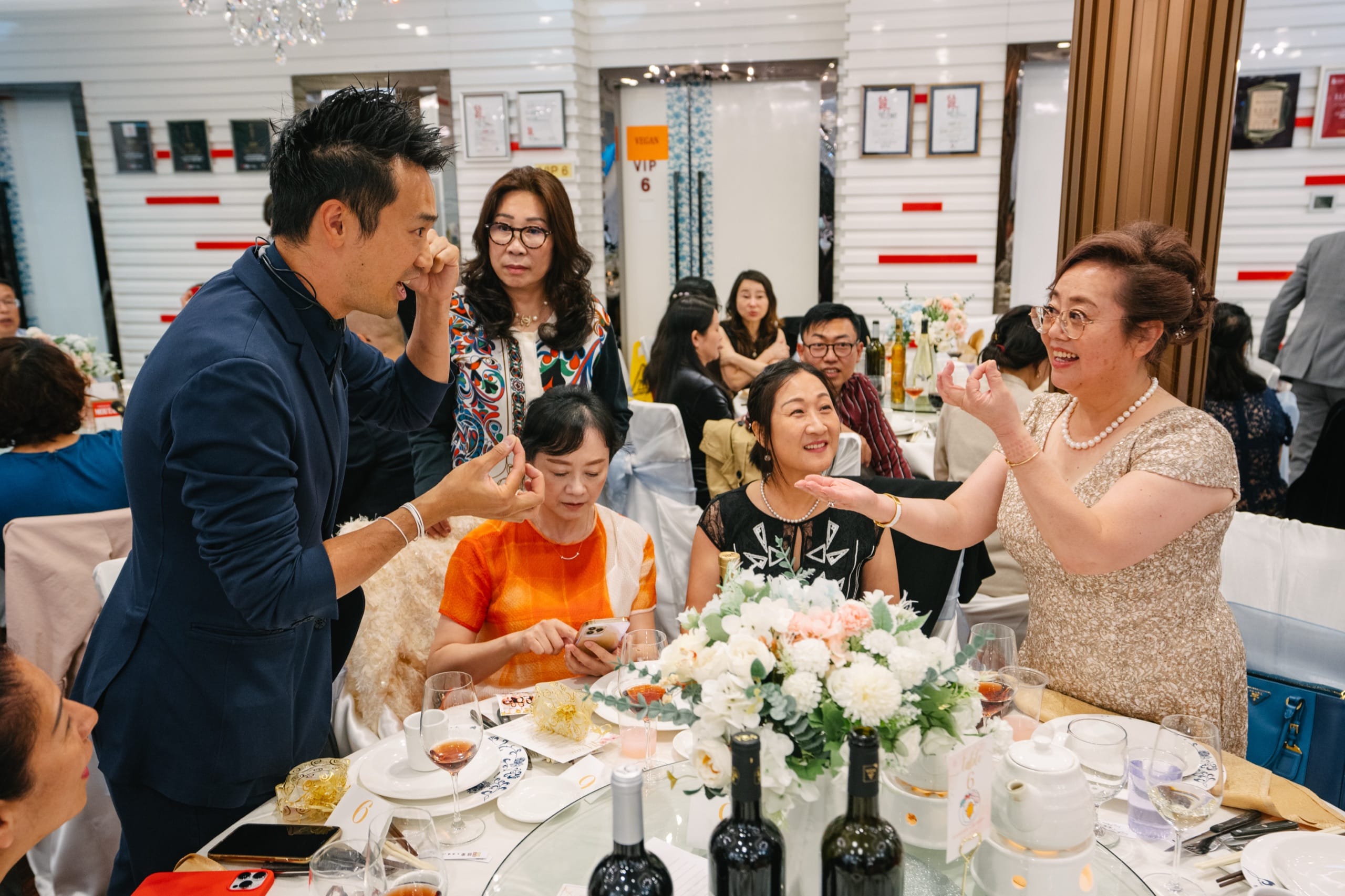
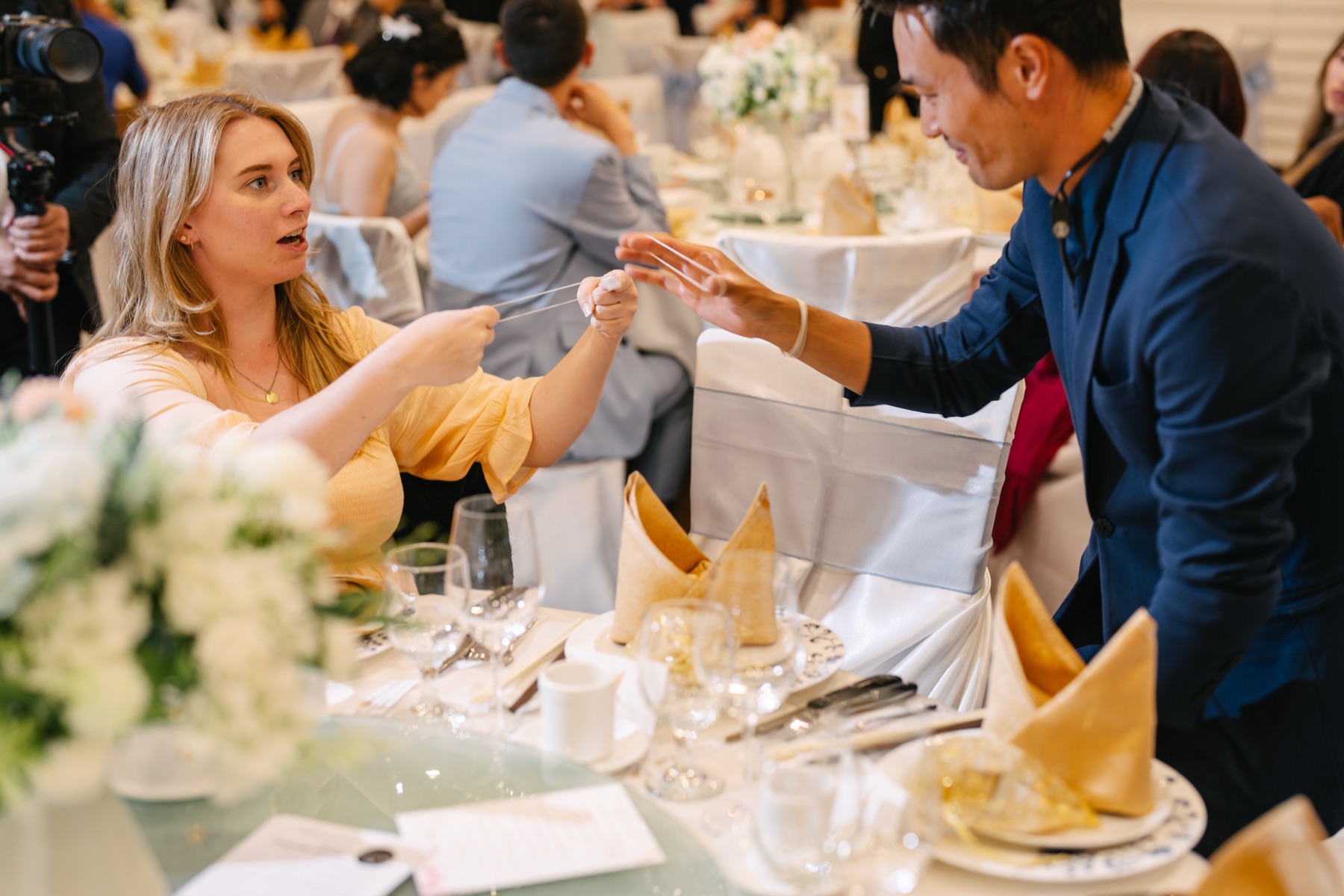
Magic does not need translation. A coin vanishing in someone's closed hand reads identically in every language in the room. I can perform the same effect at a table of grandparents and a table of university friends and get the same reaction, without saying a word that has to be understood.
What that does socially is the real product. A grandmother and a groomsman who have no shared vocabulary end up looking at each other and laughing about the same impossible thing. They now have something in common. That is worth more to a wedding than any single trick.
What the three roles looked like across the night
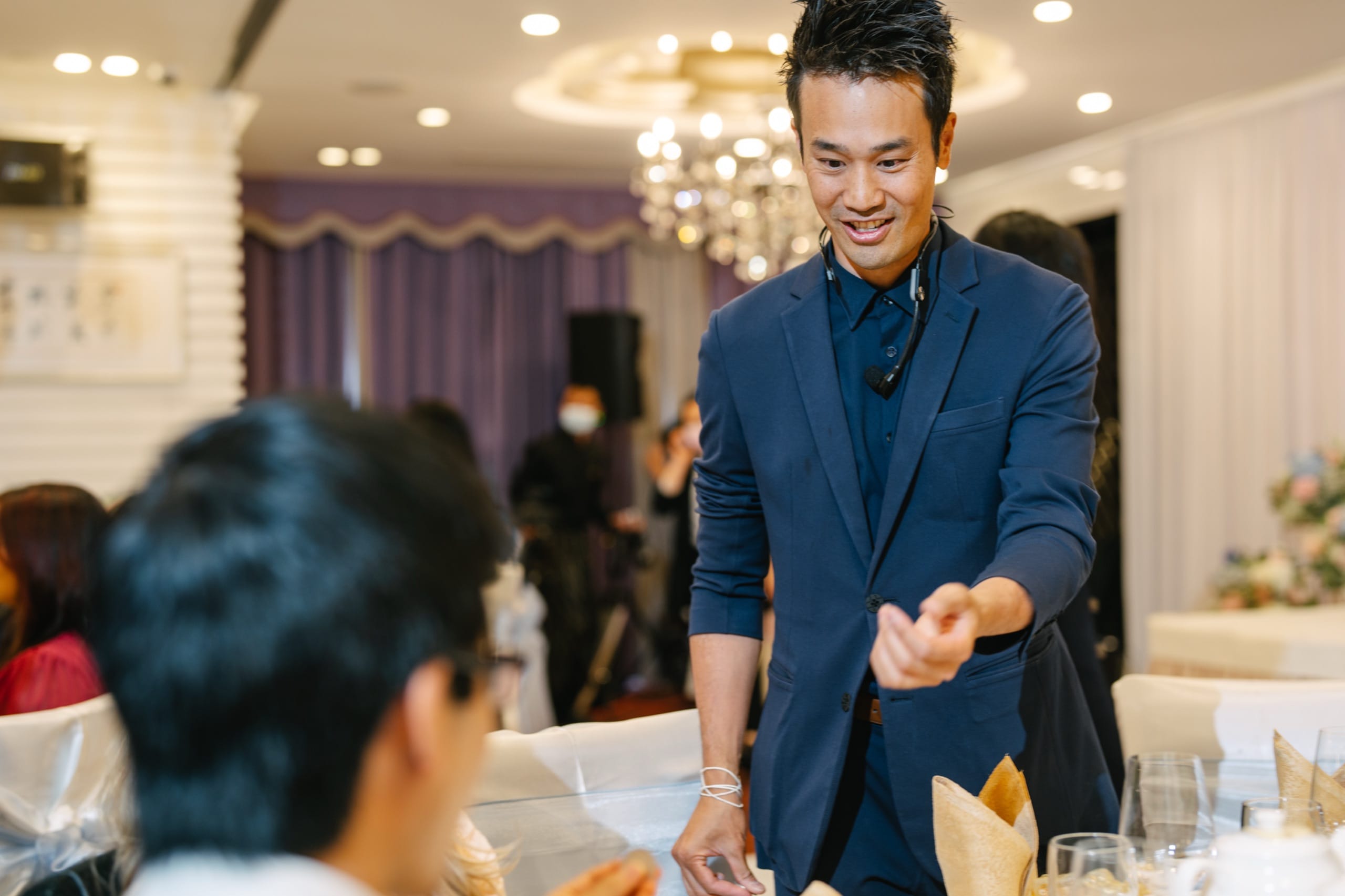
As MC. Welcome, introductions, keeping the couple's programme moving, and pronouncing every name properly, which matters enormously at a banquet where half the names are in a language your MC may not speak. If you are not sure, you ask beforehand. You do not guess on a microphone in front of someone's grandmother.
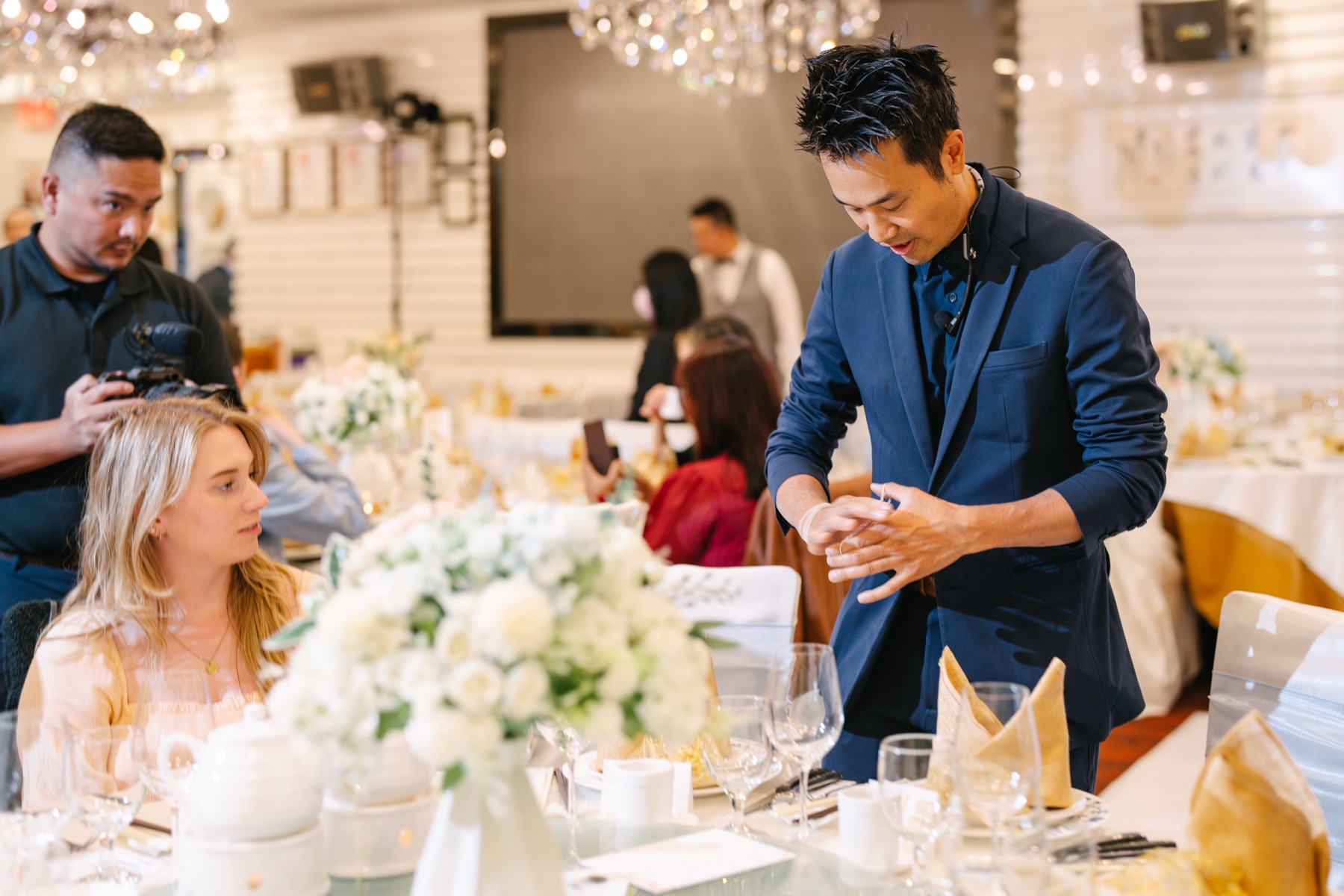
As the close-up magician. Table to table between courses, working the gaps rather than competing with the food.
As the show. A set performed for the whole room, placed where the couple wanted a peak rather than wherever it happened to fit.
Their coordinator's note to the vendor team the next morning was simply that Jennifer and Robert had had a beautiful wedding, which is the review that actually matters on a day like that.
Would I recommend this for every wedding?
No. If you already have an MC you love, a family friend who knows everyone and is genuinely good at it, keep them. I will work happily alongside a good MC and make them look better.
But if you are currently planning to ask an uncle, or you have not solved the MC question yet and you are also thinking about entertainment, the combination is worth pricing. It is almost always less than two good vendors, and it removes every coordination risk between them.
Frequently asked questions
Do you MC Chinese wedding banquets?
Yes. The main practical requirement is preparation: getting the run sheet, the name list and the pronunciations ahead of time, and understanding where the tea ceremony, the toasts and the course breaks fall. The magic is the easy part. The hosting is where the preparation goes.
Does close-up magic work at a banquet with a full dinner service?
It works better than most alternatives, because it fits between courses rather than interrupting them. A stage show mid-banquet fights the kitchen. Close-up uses exactly the time the kitchen leaves you.
What size of wedding does this suit?
Eighty is a good number for the full combination. Small enough that hosting feels personal and every table gets proper close-up attention, large enough to justify a show. Above two hundred, the close-up coverage needs to extend or a second performer makes sense.
Do you perform for guests who do not speak English?
Constantly, and it is one of the reasons this format suits multicultural weddings. Close-up magic is visual. The reaction does not depend on the patter, so a table of grandparents gets exactly the same experience as a table of the couple's friends.