Every other corporate event I do has one job: people should enjoy themselves.
A fundraising gala has two, and the second one is harder. The room has to enjoy itself and open its wallet. Those two things are related, but not in the simple way most people assume, and getting the relationship wrong is expensive in a way a Christmas party never is.
If you sit on a gala committee, this is the piece I wish someone had handed me the first time I worked one.
The mistake: treating entertainment as the reward
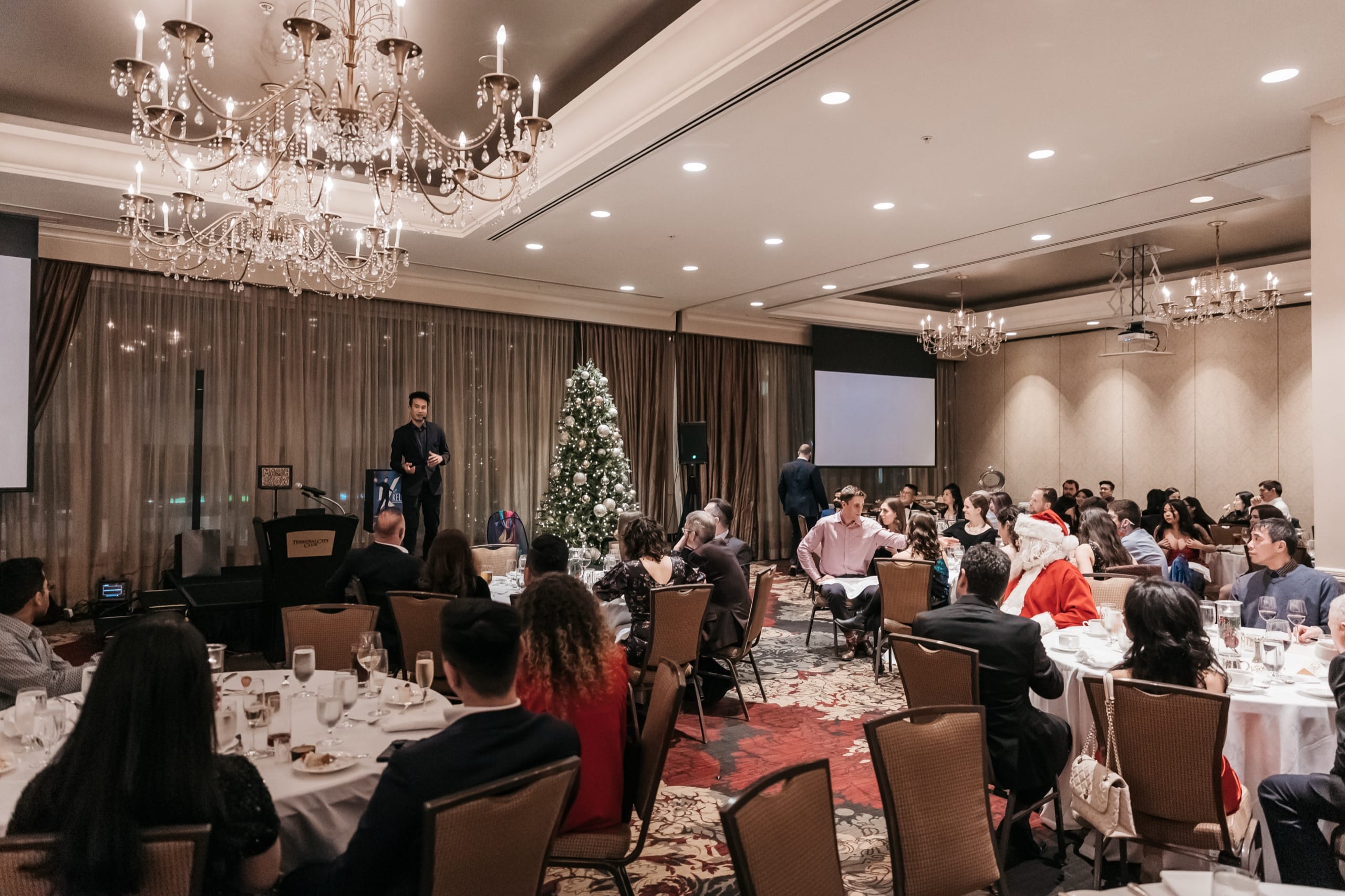
The most common gala run sheet looks like this. Reception. Dinner. Speeches and the ask. Auction. Then, at the end, entertainment as a thank-you for sitting through it.
I understand the logic. It feels respectful to the cause to keep the serious part serious. But it gets the psychology backwards.
By the time you make the ask, you need the room warm, connected and feeling generous. Generosity is a social state, not a rational one. People give more when they feel part of something and less when they feel like an audience being processed. If your only warming device is a plated dinner and a slideshow, you are asking a cold room for money.
Entertainment placed before the ask is not a reward. It is preparation.
Where it actually belongs
Reception, during the silent auction. This is the highest-value slot at almost every gala and the most commonly wasted one.
Here is what a silent auction reception normally looks like: guests arrive in ones and twos, walk the tables once, write a bid or two, and then stand with the people they came with. The room is quiet. Nobody circulates. And crucially, nobody walks past the auction tables a second time.
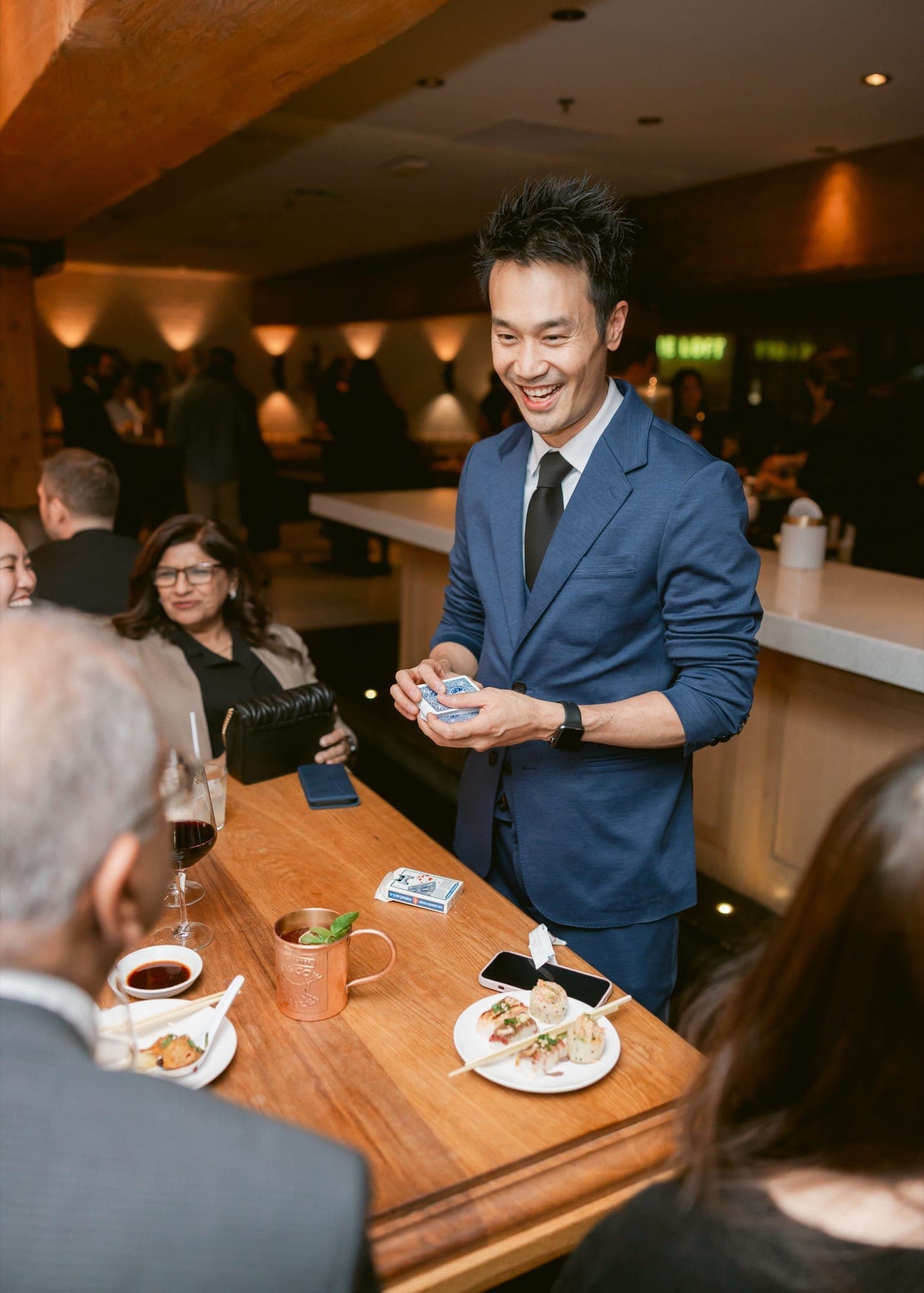
Close-up magic changes the traffic. I work the room and groups form and dissolve around me, which means people move. They end up standing somewhere they were not standing before, and on the way they pass the auction tables again. I am not selling anything. I am just the reason the room is not static.

Table to table as dinner starts. Gala seating is often strangers. Corporate tables get sold to companies who send whoever is free, so table eight might be eight people from four organisations who have never met. Close-up gives them a shared thing to react to in the first twenty minutes, and a table that has laughed together bids together later.
After the ask, not before. The stage show belongs at the end, once the serious part is done. That is the one piece of the conventional running order that is right.
Where entertainment gets in the way
I want to be straight about this, because someone should be.
Never between the cause and the ask. If you have a client story, a video, or a speaker who is going to move the room, nothing goes between that and the ask. Not me, not a band, not a raffle draw. That emotional moment is the single most valuable thirty seconds of your night and it must lead directly into the request. I have watched committees break that sequence with a "quick bit of fun to lift the mood," and it costs real money.
Never a competing spectacle during the auction. A live auction needs the room's full attention on the auctioneer. Anything happening at the edges is working against you.
Not too long. A gala programme is already full. Speeches run over, the video does not cue, the auction takes longer than planned. Entertainment that needs a protected forty-five minutes becomes the thing that gets cut, badly, at 9:40pm.
The thing nobody tells you about gala volunteers
At a company party, if a volunteer looks a bit silly, everyone laughs and it is fine.
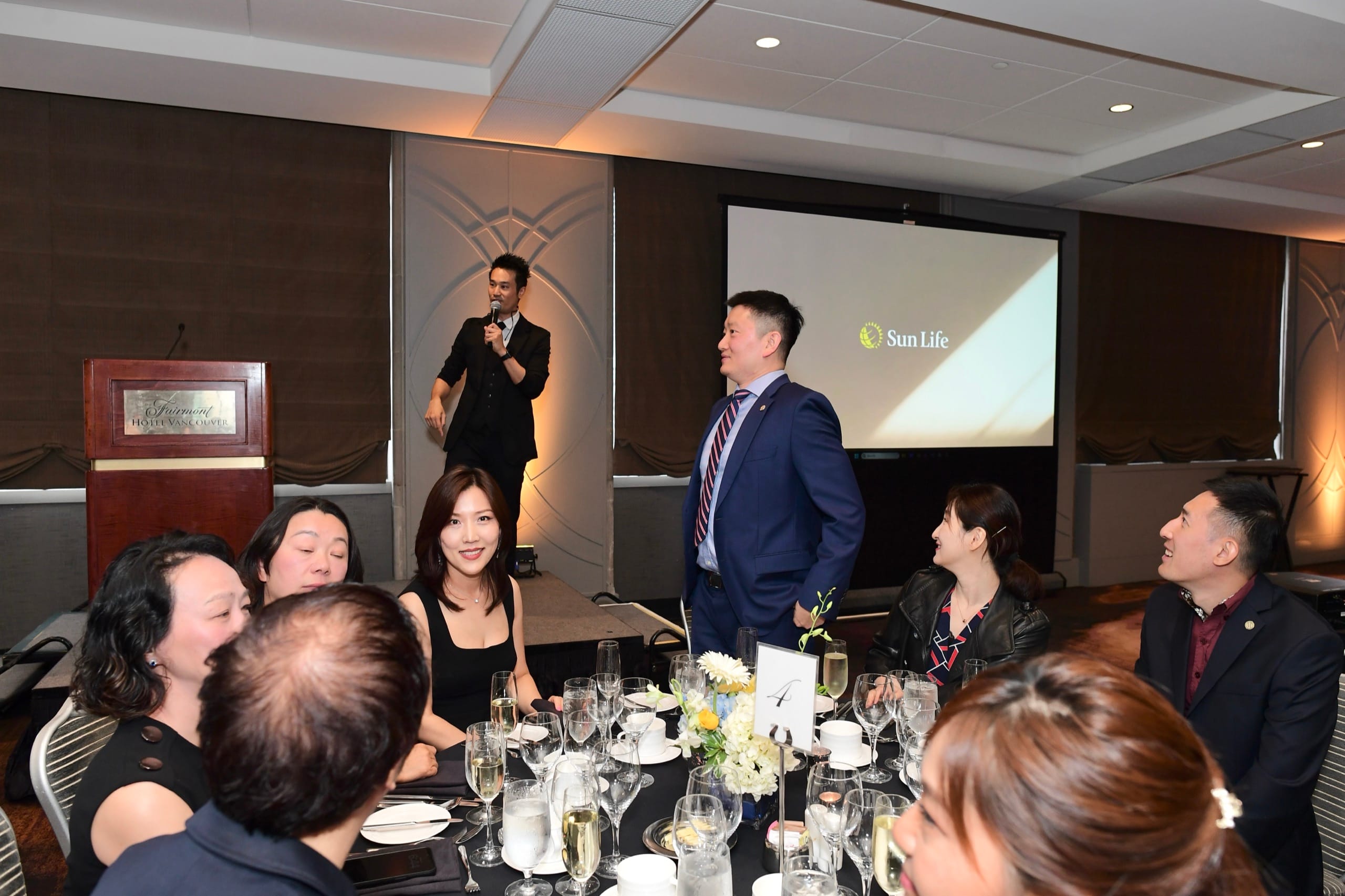
At a gala, the person you bring on stage is quite possibly a major donor, a board member, or someone the organisation needs to keep. Make them look foolish in front of the room and you have not just had a bad moment, you have created a problem for the executive director on Monday.
So the rule I hold everywhere is absolute at a fundraiser: the volunteer is the star, never the punchline. They go back to their seat looking better than when they left it. If you are interviewing performers for a gala, ask them directly how they handle volunteers, and listen for whether the answer involves anyone being embarrassed.
A running order that works
Not the only one, but a reliable one:
- Reception with silent auction — close-up magic through the room, keeping traffic moving past the tables
- Guests seated, dinner service begins — close-up continues table to table for the first stretch
- Welcome and programme — the host takes over
- The cause — story, video, speaker. Nothing interrupts this
- The ask — straight out of the emotional peak, no gap
- Live auction — full attention, no competing activity
- The show — now. The room has given, the pressure is off, and the night ends on a high rather than on a fundraising total
On budget, honestly
Entertainment at a fundraiser is a line item that has to justify itself against the cause, and I think that is completely right. Committees should ask the question.
The honest answer is that it is not justified by the performance. It is justified by whether the room is warmer when you ask than it would have been otherwise. If you cannot see how a booking does that, do not make it. If you can, place it where it does the work rather than where it feels like a treat.
Frequently asked questions
What kind of entertainment works best at a charity gala?
Something that warms the room without competing with the programme. Close-up magic during the reception and early dinner does that better than a stage act, because it needs no protected time slot and it keeps guests circulating past the silent auction. Save anything stage-based for after the ask.
When should entertainment happen at a fundraiser?
Before the ask to warm the room, and after the auction to close the night. Never between the emotional high point of your cause and the request for money.
Does entertainment take money away from the cause?
It can, if it is booked as decoration. It usually does not if it is placed to increase circulation during the silent auction and to make seated strangers into a table that has laughed together. Ask what the booking is supposed to accomplish, and put it where that happens.
How long should a gala stage show be?
Shorter than you think. Forty-five minutes is standard for a corporate evening; at a gala with a full programme, a tighter set placed after the auction usually serves the night better and is far less likely to get cut when the speeches run long.