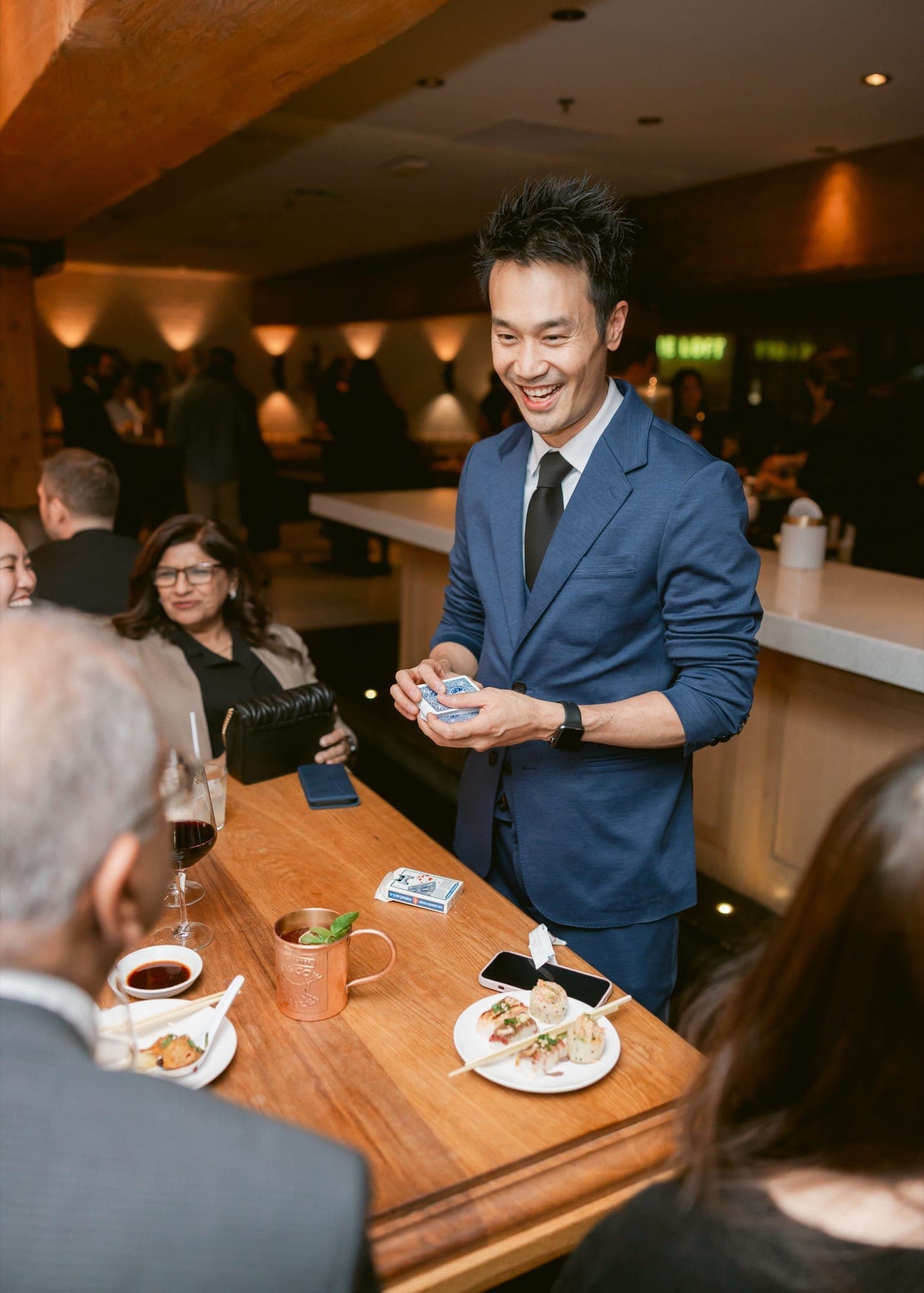

Most of the case studies on this site are downtown. Hotel ballrooms, law firms, conference centres, black tie.
This one is a building supply company in Surrey, and it is the booking I would point to first if you asked me what a repeat client actually looks like.
Southridge Building Supplies booked us in 2023, and booked us again in 2025. Same kind of night, same two companies in the room.
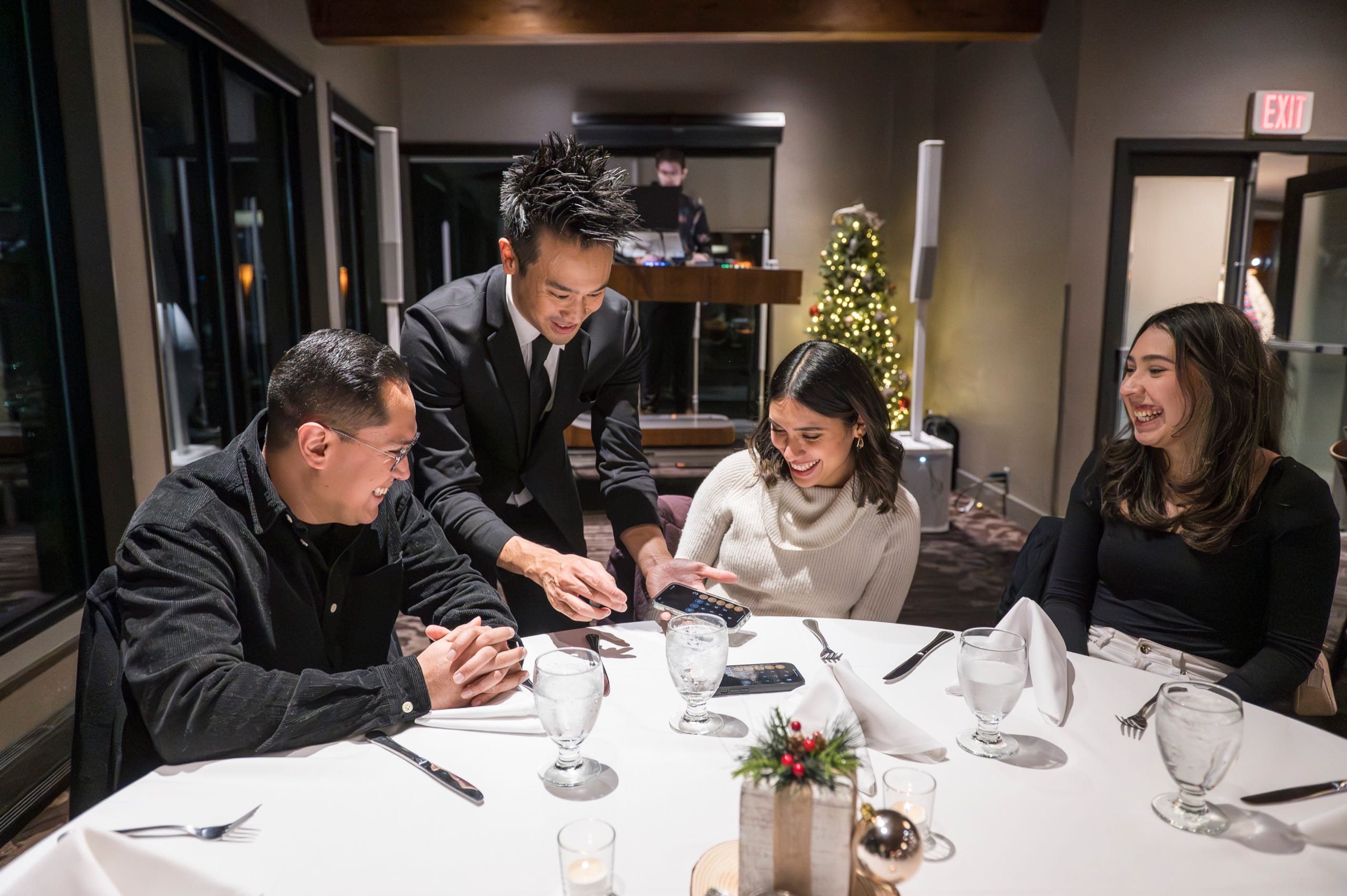
Two companies, one party
The detail that makes this event interesting: it is not one company's Christmas party. Southridge shares the night with Dawson Brill Lumber, and has done for years.
That is a genuinely harder brief than it sounds, and it is the same structural problem I keep writing about in different costumes. Eighty people in a room, from two organisations, who work in the same industry and mostly do not know each other. Left alone they will sit with their own company, talk shop with their own colleagues, and go home having met nobody new.
Nobody plans a shared Christmas party hoping the two halves of the room stay separate. But that is the default outcome unless something in the evening actively works against it.
What a trade crowd needs that a downtown room does not
I want to be careful here, because there is a lazy version of this observation that is basically snobbery.
The real difference is not sophistication. It is that a trade company Christmas party has no programme. There are no awards, no keynote, no client-facing agenda, no reason for anyone to be on their best behaviour. It is eighty people who have worked hard all year, in a room, with dinner coming.
A downtown corporate evening has a structure that carries it. This kind of night does not, and that is exactly why it needs entertainment more, not less.
It also means the entertainment has to earn its place immediately. Nobody at this party is going to sit politely through something that is not landing because it would be rude to the organisers. A room like this is the most honest audience you will ever work, and I mean that as a compliment.
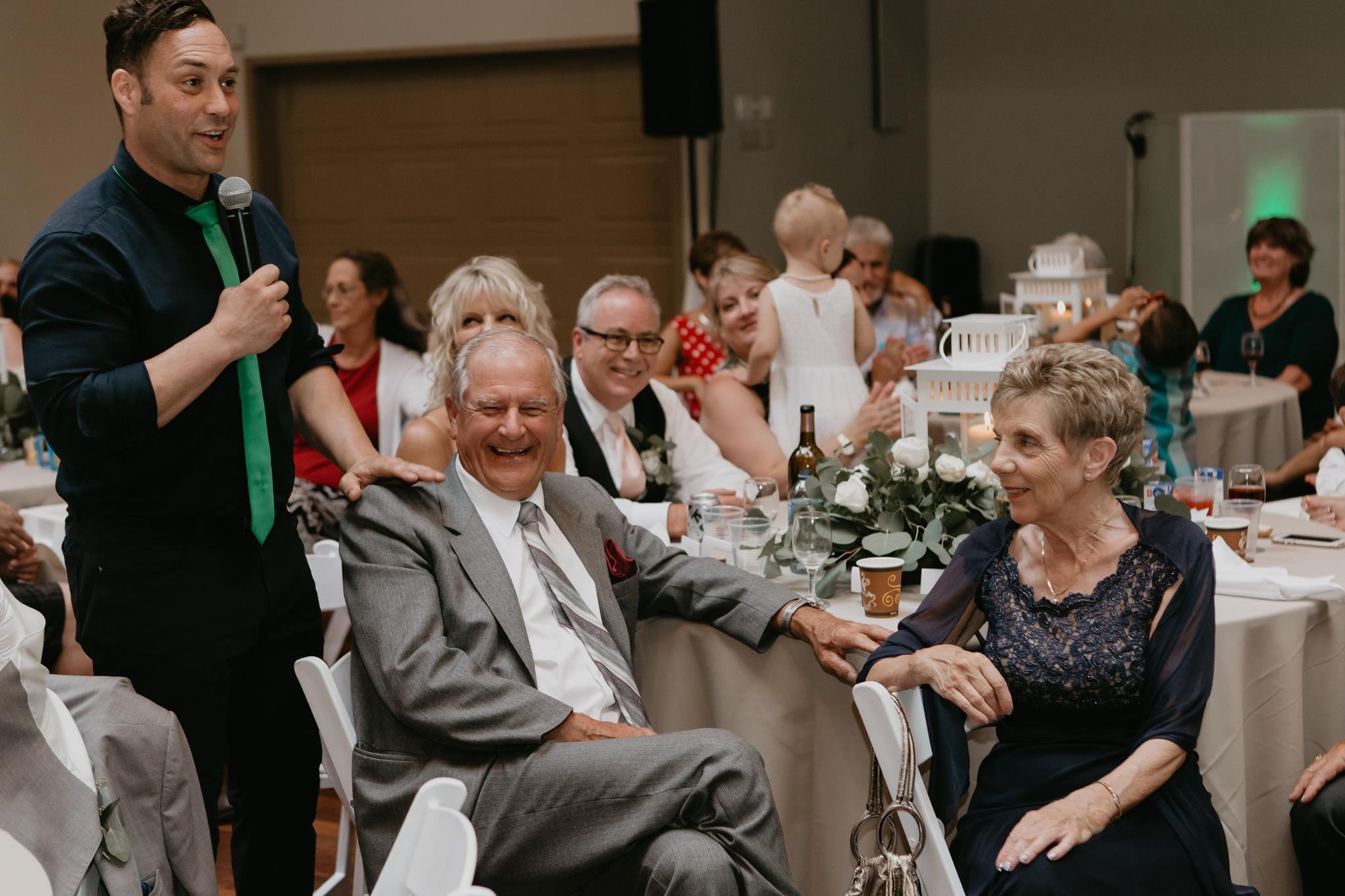
How the night runs
Jamey, who organises it, gave us the shape in one line: cocktails and mingling from six, dinner at seven.
That is a long opening. An hour of unstructured time with eighty people arriving from two different companies is precisely the window where the evening is either made or wasted, and it is why we work it hard.
We do this one as a pair. Mike Oulton hosts and I perform, which means the mingling hour has close-up magic moving through the room while there is a voice holding the night together. Nobody has to be found and introduced, and the gaps between what is scheduled get used rather than announced.
Then dinner, then the rest of the evening, which runs late. The booking is from 5:30 to midnight.

Why a gap between bookings says more than a streak
I have written before that a rebooking is worth more than a review, because a review is written in the warm glow twenty minutes after the show and a rebooking is written out of next year's budget.
A booking with a gap in the middle is better still, and this is the part people get backwards.
A client who books you every year without thinking about it might simply be on autopilot. A client who books you, does something else the following year, and then comes back has actively re-chosen. Somewhere in between, a decision got made twice — once to move on, and once to come back. The second one is the only feedback I would fully trust.
And the way you earn it is not by being impressive once. It is by being the thing nobody has to worry about. The organiser has a venue, a caterer, prizes and eighty people to think about. If the entertainment is one of the things they never have to check on, that is worth more than any single miracle.

If you are planning a shared or trade company party
A few things I would take from this one.
Protect the mingling hour. If two companies are sharing the night, that first hour is the only chance the two halves of the room have to become one room. Do not leave it to a playlist.
Do not over-programme it. A trade crowd does not want a run sheet. They want a good night. Structure serves the room here, it does not lead it.
Book December early. This is a mid-December Saturday in Surrey, and the good vendors for those dates are gone by early autumn. This one was confirmed and paid at the end of August.
Judge the fit by the room, not the price. The most useful question is whether a performer has worked your kind of crowd, not their client list. A ballroom act and a trade Christmas party are different jobs.
Frequently asked questions
What entertainment works for a trade or construction company Christmas party?
Something that goes to guests rather than requiring them to sit and watch. Close-up magic through the mingling hour works particularly well because it needs no stage and no programme, and it fits a night that is deliberately unstructured.
How do you get two companies at a shared party to mix?
Work the first hour deliberately. Roaming entertainment forms groups out of whoever is standing nearby, which is the only reliable way to get people talking across two guest lists. Seating alone will not do it.
When should a December party in Surrey be booked?
By late summer for a mid-December Saturday. This booking was confirmed at the end of August for a 13 December event, which is about right — much later and the choice narrows to whoever happens to be free.
Is one performer enough for eighty guests?
For close-up alone, yes. When the night also needs hosting across a long evening, two people covering the room and the microphone gives you far better coverage of a five-hour party than one person switching between roles.